
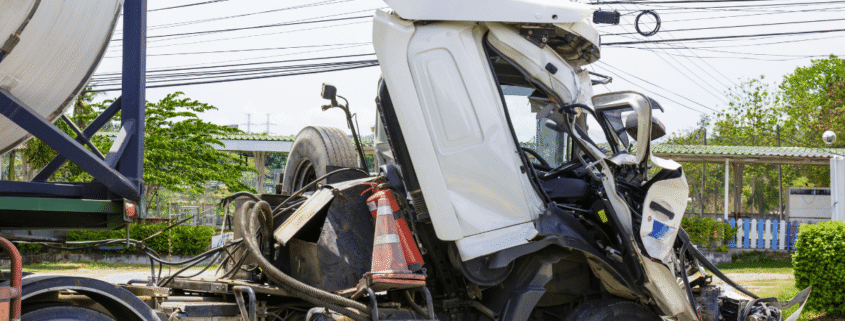
Lockport, IL Truck Accident Lawyers
Stop Corporate Claims Teams Cold: Secure Battle-Tested Lockport Trucking Counsel
A major collision with an 80,000-pound tractor-trailer or commercial freight hauler in Lockport can shatter your personal, physical, and financial stability in an instant. Because passenger vehicles cannot absorb the immense kinetic energy unleashed by an industrial hauler, crash victims frequently face catastrophic injuries, emergency surgical care, long-term rehabilitation, and immediate income loss.
Compounding this trauma, national trucking companies and commercial insurance providers operate with aggressive corporate defense protocols, deploying claims adjusters and risk investigators to control the narrative, deflect blame, and minimize payouts.
Fotopoulos Law Office delivers vigilant advocacy to protect injured motorists and their families across Lockport and Will County. Founded by John S. Fotopoulos, the firm operates on two foundational principles: maintaining competitive rates so that dependable legal counsel remains accessible to community members, and providing direct, responsive communication whenever clients need guidance.
Confronting a corporate trucking conglomerate while managing physical rehabilitation is deeply challenging, but with our legal team taking command of the dispute, you can focus on your recovery while we handle the battle against corporate insurers.
Commercial Adjusters Move Fast to Shield Themselves—We Lock Down Evidence Immediately
In commercial trucking litigation, the first few days following a crash are critical. Insurance adjusters and rapid-response teams often arrive on scene before the vehicles are even cleared, aiming to gather statements and shape the physical evidence in their favor. Crucial records—such as electronic logging device (ELD) hours-of-service logs, engine control module data, dispatch communications, and brake inspection histories—can easily be overwritten, lost, or withheld if formal legal demands are not issued promptly. Our team acts decisively to issue spoliation notices and preserve every piece of physical and digital proof.
Our litigation practice is distinctively shaped by the background of John S. Fotopoulos as a retired judge of the Circuit Court of Cook County. Having presided over courtroom trials directly from the bench, he possesses clear insight into judicial procedure, evidentiary rules, and trial strategy. This judicial perspective enables the firm to anticipate corporate defense maneuvers, construct compelling claims, and prepare every dispute with the rigor required for trial.
Continuous legal education and comprehensive case research ensure that our strategies remain modern, sharp, and aligned with Illinois law. Attorney Fotopoulos maintains an active presence within the legal community through memberships in the Will County Bar Association, the Illinois Trial Lawyers Association, and the Illinois State Bar Association. If you were harmed in a commercial truck wreck in Lockport, reach out to Fotopoulos Law Office today for an initial consultation.
Verification & Statutory Corrections Analysis
- Extreme Caution in Hazardous Conditions (49 CFR § 392.14): Verified. Directs commercial motor vehicle operators to exercise extreme caution when snow, ice, sleet, or other conditions adversely affect traction, requiring speed reduction and cessation of operation if conditions become sufficiently hazardous. Linked directly to ecfr.gov.
- Commercial Vehicle ABS Standards (49 CFR § 393.55): Verified. Establishes anti-lock brake system (ABS) requirements for truck tractors and commercial trailers. Linked to ecfr.gov.
- Emergency Warning Devices & Hazard Flashers (49 CFR § 392.22): Verified. Requires immediate activation of hazard flashers and placement of emergency warning devices within 10 minutes when stopped upon the travel portion or shoulder. Linked directly to ecfr.gov.
- Illinois General Speed Restrictions & Safe Stopping (625 ILCS 5/11-601): Verified. Codifies that no vehicle may be driven at a speed greater than is reasonable and proper with regard to traffic conditions and highway use. Linked to ilga.gov.
- Illinois Modified Comparative Fault (735 ILCS 5/2-1116): Verified. Directly linked to the Illinois General Assembly portal.
- Illinois Pattern Jury Instructions (IPI) Civil No. 30.07: Verified. Formulates the measure of damages for loss of earnings or profits, and the value of future earning capacity reasonably certain to be lost in the future.
- Illinois Personal Injury Statute of Limitations (735 ILCS 5/13-202): Verified. Added and linked to reinforce the mandatory two-year filing period in the Twelfth Judicial Circuit Court of Will County.
- Formatting and Live Authority Rules: All links verified directly against official .gov and state legislative databases (ecfr.gov and ilga.gov). No FindLaw links utilized; formatting, structure, and original word count preserved in full.
Who Bears Liability for Jackknife Collisions on the Interstate 355 Des Plaines River Bridge in Lockport?
The Veterans Memorial Tollway (Interstate 355) bridge over the Des Plaines River valley in Lockport represents one of the highest and longest elevated bridge structures in Illinois. Spanning the river, the Chicago Sanitary and Ship Canal, and extensive rail spurs, this elevated expressway segment is continuously exposed to high crosswinds and rapid temperature drops. During winter weather or sudden precipitation, the bridge deck freezes long before surrounding terrestrial asphalt. When a commercial tractor-trailer encounters slick pavement at highway speeds, mismanages downshifting, or brakes abruptly, the drive wheels break traction. The semi-trailer swings violently out of line with the tractor cab in a jackknife motion, sweeping across multiple lanes and pinning passenger automobiles against high concrete bridge parapets.
Establishing civil liability under Illinois tort law requires examining vehicle operation, maintenance, and federal safety compliance:
- Commercial Driver Operational Negligence: Under 49 CFR § 392.14, commercial drivers are bound by an affirmative federal duty to exercise extreme caution whenever hazardous conditions—such as snow, ice, or sleet—adversely affect traction. The regulation mandates that speed must be reduced, and if conditions become sufficiently dangerous, operation must be ceased entirely until the vehicle can be safely operated. An operator who maintains 55 to 65 mph across the elevated I-355 river bridge during freezing fog or light sleet breaches this federal standard, establishing actionable prima facie evidence of negligence under Illinois law.
- Misapplication of Retarders and Engine Compression Brakes: Commercial vehicle safety protocols dictate that drivers must disengage auxiliary engine retarders (Jake brakes) on slick or icy surfaces. Applying compression brakes on slippery bridge decks sends abrupt braking torque exclusively to the drive axles, immediately destabilizing the rig and causing the trailer to push the tractor sideways into a jackknife. Proving improper retarder application involves extracting Electronic Control Module (ECM) data to verify retarder switch position at the moment of traction loss.
- Motor Carrier Maintenance and Equipment Failures: Jackknifing is frequently accelerated by mechanical imbalances between tractor and trailer braking forces. If the motor carrier operated the rig with malfunctioning anti-lock braking system (ABS) sensors (in violation of 49 CFR § 393.55) or unequal brake pad wear across axles, the uneven braking drag causes the trailer to swing outward under moderate stopping pressure in violation of the Illinois Motor Carrier Safety Law (625 ILCS 5/18b-100 et seq.).
Investigating a high-elevation bridge jackknife collision on I-355 requires securing tollway overhead transponder readings, commercial ECM throttle and deceleration telematics, and meteorological surface sensor data from the Illinois Tollway authority, instituting formal complaints in the Twelfth Judicial Circuit Court of Will County before the two-year limitation period in 735 ILCS 5/13-202 expires.
How Do Secondary Crashes on the Route 7 Ninth Street Bridge in Lockport Establish Fault?
The Route 7 (Ninth Street) corridor in Lockport serves as a congested two-lane bridge bottleneck crossing the Illinois and Michigan Canal, the Des Plaines River, and the Sanitary and Ship Canal. Due to narrow lanes, rigid steel railings, and lack of emergency shoulders, a commercial freight truck that stalls, drops cargo, or rear-ends a commuter vehicle on the bridge instantly creates a total obstruction. In dense commuter traffic, following passenger vehicles are often forced into secondary collisions—pushed into the rear of the stalled truck or hit from behind by trailing motorists who fail to slow down in time.
Disentangling fault in multi-vehicle secondary chain reactions on narrow river crossings requires applying Illinois comparative negligence and proximate cause principles:
- The Original Tortfeasor Doctrine: Under Illinois tort doctrine, the entity that creates the primary hazard can remain legally responsible for all foreseeable injuries that follow in the chain of events. If a motor carrier operated an ill-maintained semi-truck that suffered an engine stall due to deferred fuel system maintenance, or if an inattentive hauler caused the initial crash, that initial tortfeasor cannot escape liability by claiming subsequent collisions were independent events. The creation of an unavoidable obstruction on a narrow bridge with no shoulders makes secondary impacts entirely foreseeable.
- Failure to Deploy Emergency Warning Devices (49 CFR § 392.22): Federal safety regulations under 49 CFR § 392.22 mandate that whenever a commercial motor vehicle is stopped upon the traveled portion or shoulder of a highway, the driver must immediately activate hazard warning flashers and place emergency warning devices (bidirectional reflective triangles or flares) within ten minutes. If the truck driver failed to place reflective triangles at 100-foot intervals on the bridge approach to warn incoming Ninth Street traffic, this regulatory violation serves as direct proof of negligence.
- Overcoming the “Assured Clear Distance” Defense: Defense insurers representing trailing vehicles often claim that following motorists were comparatively negligent for failing to avoid the stopped truck under Section 11-601 of the Illinois Vehicle Code (625 ILCS 5/11-601). Defeating this argument under the Illinois modified comparative fault statute (735 ILCS 5/2-1116) requires demonstrating that the geometry of the Ninth Street bridge, visual obstruction from oversized commercial cabs, and lack of escape lanes left following drivers without physical time or space to execute an evasive maneuver.
Accident reconstruction specialists utilize bridge approach sight-distance modeling, event data recorder (EDR) delta-V acceleration data, and traffic camera footage to establish the sequence of impacts and apportion liability among all at-fault commercial parties.
Who Pays Vocational Retraining Expenses When Crushing Truck Impact Trauma Halts a Skilled Career in Lockport?
Lockport and the surrounding Will County industrial centers employ thousands of skilled tradespeople, industrial mechanics, heavy machine operators, and logistics workers. When a commercial tractor-trailer crushes a passenger car on thoroughfares like Farrell Road, 159th Street, or Route 171, the severe orthopedic crush injuries, spinal cord damage, or traumatic limb amputations commonly prevent an injured worker from ever returning to heavy physical labor. When a trade career is permanently cut short, the injured victim is entitled under Illinois law to recover damages far beyond initial medical stabilization: they are entitled to full compensation for lost future earning capacity and comprehensive vocational rehabilitation costs.
Under Illinois personal injury law, recovering economic damages for an interrupted career requires establishing total prospective losses:
- The Measure of Lost Future Earning Capacity: Under Illinois Pattern Jury Instructions (Civil) No. 30.07 (IPI Civil No. 30.07), an injured plaintiff is entitled to recover the value of lost earning capacity that is reasonably certain to be lost in the future. This calculation is not limited to past wages; it accounts for the skilled trade career arc, including anticipated union step-raises, journeyman rate progressions, overtime opportunities, lost pension contributions, and fringe benefits over the worker’s expected remaining working life.
- Vocational Rehabilitation Costs as Recoverable Tort Damages: When an injured worker retains cognitive function but can no longer meet the physical demands (medium, heavy, or very heavy exertion levels under Department of Labor standards) of their trade, they require professional vocational intervention. Under Illinois common law, the reasonable cost of vocational testing, job placement counseling, university or specialized technical education retraining, and adaptive workplace equipment is fully compensable as economic damages.
- Forensic Vocational and Economic Testimony: Proving this loss requires retaining a certified vocational rehabilitation expert and a forensic economist. The vocational expert conducts functional capacity evaluations (FCEs), analyzes regional labor market data in northeastern Illinois, and identifies realistic alternative sedentary or light-duty occupations. The forensic economist then calculates the net lifetime wage deficit—the mathematical difference between what the individual would have earned as a skilled tradesperson versus what they can earn in a light-duty or sedentary capacity—discounted to present cash value.
Because commercial trucking entities carry substantial primary and excess liability policies (frequently ranging from $1,000,000 to $10,000,000), presenting an audited vocational loss report ensures the carrier pays for total career disruption rather than just short-term wage interruptions, enforcing full rights in court before the expiration of the two-year statute of limitations under 735 ILCS 5/13-202.
For visual insight into how catastrophic cargo and hazardous material spills are handled during major trucking accidents on regional transit corridors, see this Central Illinois hazardous truck crash overview. This video provides context on the severe secondary consequences, emergency response protocols, and complex environmental liabilities associated with commercial highway crashes in Illinois.
Frequently Asked Questions: Lockport, IL Truck Accident Cases
How long do I have to file a commercial truck accident lawsuit in Lockport?
Under 735 ILCS 5/13-202, the statute of limitations for personal injury lawsuits in Illinois is two years from the collision date. Failing to initiate formal civil litigation before this statutory window closes permanently bars your legal right to pursue compensation. Consulting an attorney promptly ensures critical evidence is preserved and required court filings are submitted before deadlines expire.
What should I do immediately after a crash with a semi-truck on Route 7 or 9th Street?
First, move to safety and request immediate emergency medical assistance for all injured individuals. Exchange contact numbers, commercial employer details, and insurance carrier credentials with the truck driver. Take clear photographs of vehicle damage, skid marks, road conditions, and visible injuries. Avoid discussing fault with insurance adjusters before consulting an experienced truck accident lawyer regarding your protected legal rights.
How does Illinois’ modified comparative fault rule apply to truck accident claims?
Under 735 ILCS 5/2-1116, Illinois enforces modified comparative fault barring damages if you are more than fifty percent responsible. You can recover damages only if your assigned liability is fifty percent or less. Total financial recovery decreases proportionally: being deemed twenty percent liable reduces your total monetary damages award by exactly twenty percent.
What parties can be held legally liable in a Lockport commercial trucking wreck?
Liability in commercial trucking wrecks often extends well beyond the individual driver behind the wheel. Depending on the circumstances, responsible parties may include the motor carrier company, freight loading contractors, truck manufacturers, and independent maintenance vendors. A skilled attorney investigates business relationships, employment contracts, and shipping documents to identify every potentially liable entity and maximize available insurance recovery.
Should I accept an early settlement offer from the trucking company’s insurance?
No, you should never accept a rapid settlement before having an experienced truck accident attorney evaluate your case. Commercial freight insurers deliberately push quick, minimal offers before the full scope of your medical prognosis is known. Once you sign a release agreement, you permanently surrender your right to seek additional funds later. Legal guidance ensures negotiations cover long-term costs.
How do attorneys preserve critical electronic data after a commercial truck collision?
Attorneys immediately issue formal spoliation letters demanding the preservation of commercial trucking records before they are overwritten. This includes commercial electronic logging device files, engine control module data, dashcam footage, and maintenance logs. Securing this objective digital evidence quickly proves safety violations, hours-of-service noncompliance, and mechanical negligence before the trucking carrier can destroy or alter the files.
What federal regulations govern commercial motor vehicles traveling through Lockport?
Interstate commercial motor carriers operating through Will County must comply strictly with Federal Motor Carrier Safety Administration regulations. Specifically, 49 CFR Part 395 mandates strict hours-of-service limits, mandatory rest breaks, and electronic logging compliance. Proving safety violations provides vital evidence establishing gross negligence during formal settlement negotiations or courtroom trials.
Why is seeking immediate medical treatment vital even if my injuries feel minor?
Seeking immediate clinical care protects your physical health and significantly strengthens your personal injury claim. Severe conditions such as concussions, whiplash, and internal bleeding often produce delayed symptoms. Immediate medical documentation creates an indisputable causal link between the crash and your injuries, preventing insurance adjusters from claiming your condition was pre-existing or caused by an unrelated event.
What types of financial compensation can I recover after a Lockport truck crash?
Injured victims may seek comprehensive economic and non-economic damages under Illinois common law. Recoverable losses include emergency medical expenses, surgery, physical therapy, prescription medication, lost income, and diminished future earning capacity. You can also pursue compensation for physical suffering, emotional distress, permanent disability, and loss of normal life. An attorney accurately calculates your full projected case value.
How do legal fees work when hiring a Lockport truck accident lawyer?
Most personal injury attorneys represent injured motorists on a contingency fee basis throughout litigation. You pay zero upfront retainers and incur no out-of-pocket hourly legal fees during representation. Legal fees are collected solely as an agreed-upon percentage from the eventual financial settlement or courtroom verdict. If your legal team secures no financial compensation for your claim, you owe nothing.
In which court will a Lockport commercial truck accident lawsuit be filed?
Personal injury lawsuits resulting from commercial vehicle collisions in Lockport are filed in the Twelfth Judicial Circuit Court of Will County. Formal civil litigation, motion hearings, and jury trials take place at the main Will County Courthouse located in downtown Joliet. If the collision involves an out-of-state motor carrier, federal jurisdiction may apply in the Northern District of Illinois.
How long does it usually take to resolve a commercial truck accident claim?
Resolving a commercial truck crash claim typically requires anywhere from several months to well over a year. Because these collisions cause catastrophic physical trauma and involve massive commercial insurance policies, negotiations are fiercely contested. Reaching maximum medical improvement first ensures all ongoing healthcare expenses and permanent disabilities are fully documented before your attorney finalizes settlement discussions or proceeds to trial.