
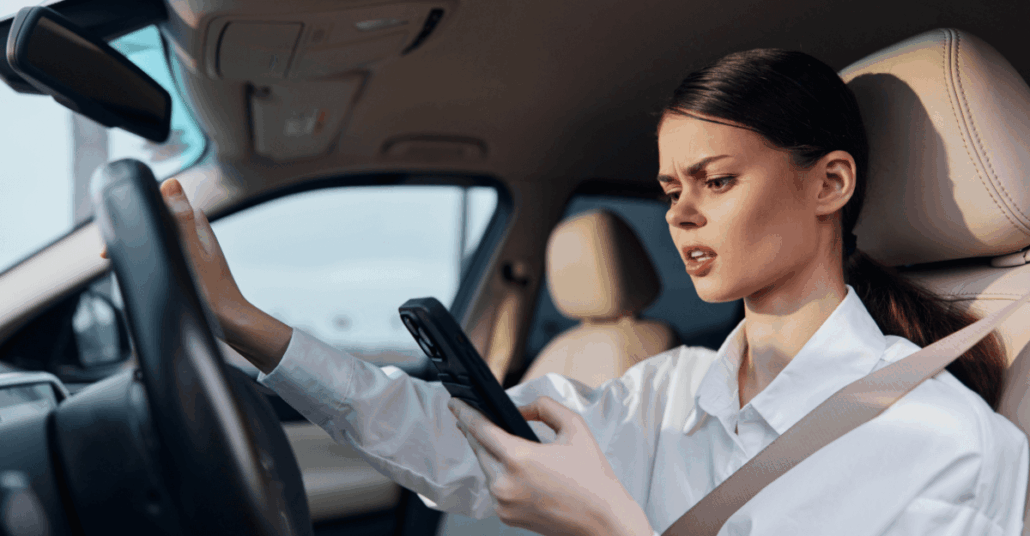
How to Prove Distracted Driving in a Bourbonnais Car Crash Case
A drive down Route 45 or along William Latham Drive in Bourbonnais is often routine, but that sense of familiarity can shatter in a second when another driver glances down at their phone. Distraction is a leading cause of collisions, yet proving that the other motorist wasn’t paying attention is one of the most challenging aspects of a personal injury claim. Unlike a drunk driving case, where a breathalyzer provides scientific proof, distraction often leaves no physical trace at the scene.
Victims of these crashes often know what they saw—the other driver looking down, the phone in their hand, or the complete lack of braking before impact. However, knowing the truth and proving it in an Illinois court are two very different things.
Defining Distracted Driving Under Illinois Law
Distracted driving encompasses far more than just texting. Illinois law defines it broadly as any activity that diverts attention from driving. The National Highway Traffic Safety Administration (NHTSA) categorizes these distractions into three distinct types, all of which are relevant when building a legal case.
- Visual Distraction: This involves taking eyes off the road. Examples include checking a GPS navigation system, looking at a billboard, or turning to look at a passenger in the back seat.
- Manual Distraction: This occurs when a driver takes their hands off the wheel. Common scenarios involve eating, drinking, adjusting the radio, or reaching for an object on the floor.
- Cognitive Distraction: This happens when a driver’s mind wanders away from the task of driving. A hands-free phone conversation, while legal in some contexts, can still cause significant cognitive distraction, leading to “inattention blindness” where a driver looks at the road but fails to process hazards.
Illinois has strict statutes specifically targeting electronic device use. Under 625 ILCS 5/12-610.2, the use of hand-held wireless telephones while driving is prohibited. This statute provides a strong legal foundation for negligence per se arguments if evidence confirms the driver was holding a phone at the time of the crash.
Immediate Evidence Collection at the Crash Scene
The moments immediately following a collision are chaotic, but they are also when evidence is most fresh. If you are physically able to do so safely, or if you have a passenger who can help, gathering information at the scene can significantly strengthen a future claim.
Observations of Driver Behavior
Note the other driver’s immediate reaction. Did they quickly stash a phone in the glove compartment or under the seat? Did they apologize and admit to “looking away for a second”? These excited utterances can sometimes be admissible as evidence, even if they are technically hearsay, because they were made under the stress of the event.
Witness Statements
Bystanders or other motorists may have had a better angle on the other vehicle before the impact. A witness might have seen the driver looking down at their lap or holding a device to their ear. Securing names and contact information for these independent witnesses is vital, as their testimony carries significant weight with insurance adjusters and juries.
Police Reports
When the Bourbonnais Police or Kankakee County Sheriff’s deputies arrive, ensure they are aware of your suspicions. While an officer may not issue a citation for distracted driving without seeing it themselves, your statement will be recorded in the official Illinois Traffic Crash Report. This report serves as a foundational document for the investigation.
The Critical Role of Electronic Evidence
In the digital age, electronic data often provides the “smoking gun” in distracted driving cases. This evidence is rarely volunteered; it must be demanded and preserved through legal channels immediately after an accident to prevent it from being deleted or overwritten.
Cell Phone Records
Detailed billing records can show the exact times text messages were sent or received, or when data was used for apps. If a text message was sent at 4:32 PM and the police report lists the crash time as 4:32 PM, the correlation is difficult for the defense to explain away.
Metadata and Forensics
Simple billing records do not tell the whole story. They might not show if a driver was composing a draft email, playing a game, or scrolling through social media. A forensic examination of the device’s physical memory can reveal this activity. This process requires a court order and specialized experts to extract metadata without altering it, establishing a timeline of user interaction leading up to the crash.
Vehicle Event Data Recorders (Black Boxes)
Modern vehicles are equipped with Event Data Recorders (EDRs). These “black boxes” capture data on vehicle systems in the seconds before a collision. They record speed, brake application, steering angles, and seatbelt use. A lack of braking or evasive steering before impact is a strong indicator of distraction, suggesting the driver never saw the impending danger.
Subpoenaing Surveillance Footage
Bourbonnais is a developing area with numerous businesses and traffic cameras that may have captured the collision or the moments leading up to it. Visual evidence is compelling because it allows a jury to see the negligence with their own eyes.
- Traffic Cameras: Intersections along major thoroughfares like Route 45 (Convent Street) often have traffic monitoring cameras. While these do not always record, checking their status immediately is essential.
- Commercial Security Cameras: Businesses near the crash site—gas stations, retail stores, or banks—often have high-definition security systems pointed toward the street.
- Dash Cams: Assessing if other vehicles in the vicinity, or even the at-fault driver’s own vehicle, had a dashboard camera recording.
- Doorbell Cameras: In residential neighborhoods, systems like Ring or Nest often capture clear footage of street traffic.
Securing this footage requires quick action. Many commercial and residential systems overwrite their data every few days or weeks. A legal team can send a preservation letter to nearby businesses to ensure this evidence is not destroyed.
Deposition Testimony and Interrogatories
During the discovery phase of a lawsuit, your attorney has the opportunity to question the at-fault driver under oath. This process, known as a deposition, is a powerful tool for uncovering inconsistencies in their story.
Skilled questioning can dismantle a driver’s denial. Attorneys may ask about the driver’s habits, their destination, and who they were communicating with that day. If phone records contradict their sworn testimony, their credibility is severely damaged.
Interrogatories—written questions that must be answered under oath—can also be used to gather specific details about the driver’s device, such as the phone number, carrier, and any apps they frequently use while driving. This information helps narrow the scope of the electronic investigation.
Proving Negligence Beyond Cell Phones
While smartphones are the most common culprit, they are not the only source of distraction. Proving negligence often involves demonstrating that other activities diverted the driver’s attention.
- Food and Drink: Spilling hot coffee or dropping a sandwich can cause a driver to react instinctively, taking their eyes and hands off the controls. Stains on the driver’s clothing or food debris in the vehicle cabin, noted in photos, can support this theory.
- In-Car Technology: Infotainment systems are increasingly complex. Manipulation of GPS screens, radio touchscreens, or climate controls can be just as dangerous as texting. Vehicle data can sometimes indicate if these systems were being adjusted at the time of the crash.
- Passenger Interference: Arguments or interactions with passengers can be a significant cognitive distraction. Witness testimony regarding the behavior of occupants in the other car can be relevant evidence.
- Grooming: Applying makeup or shaving while driving is surprisingly common. Finding such items on the floorboard or seat after a crash helps build the narrative of inattention.
Establishing the “But For” Causation
In any personal injury claim, proving duty and breach is only half the battle. You must also prove causation. In legal terms, this is often the “but for” test: “But for the driver’s distraction, the accident would not have occurred.”
Defense attorneys often try to argue that the crash was inevitable due to weather, road conditions, or the actions of a third party. To counter this, accident reconstruction experts are frequently utilized. These professionals use physics and engineering principles to analyze skid marks (or the lack thereof), crush damage, and final resting positions of the vehicles.
An expert can calculate the time available for the driver to react. If the calculation shows that a focused driver had ample time to stop or swerve, but the defendant failed to do so, it strongly reinforces the claim that distraction was the primary cause. This scientific approach removes the guesswork and presents the court with objective data.
Comparative Negligence in Illinois
Illinois follows a modified comparative negligence system. This means that if you are found to be more than 50% at fault for the accident, you cannot recover damages. Even if you are less than 50% at fault, your compensation is reduced by your percentage of fault.
In distracted driving cases, the defense will almost always try to shift the blame to you. They may argue you stopped too suddenly, were speeding, or failed to use a turn signal. This makes the evidence of their client’s distraction even more important. Proving that their inattention was the dominant factor in the crash protects your right to full compensation.
For example, if the defense argues you braked suddenly, black box data showing the distracted driver was accelerating and looking down at a phone negates their argument. It shows that no matter how you braked, their complete lack of attention made the collision unavoidable.
The Impact of Distracted Driving Injuries
The injuries resulting from these preventable crashes are often severe because distracted drivers rarely brake before impact. This means the collision occurs at full speed, transferring maximum force to your vehicle and body.
Common injuries seen in Bourbonnais emergency rooms like Riverside Medical Center or AMITA Health St. Mary’s include:
- Traumatic Brain Injuries (TBIs): Caused by the violent jolting of the head or impact with the steering wheel or window.
- Spinal Cord Injuries: Ranging from herniated discs to permanent paralysis.
- Internal Organ Damage: Caused by the pressure of the seatbelt or blunt force trauma.
- Orthopedic Fractures: Broken bones in the arms, legs, ribs, and pelvis.
Documenting these injuries through comprehensive medical records is vital. These records link the physical harm directly to the negligence of the distracted driver, establishing the extent of the damages you are owed.
Damages Recoverable in Distracted Driving Cases
When negligence is established, Illinois law allows victims to seek compensation for both economic and non-economic losses. The goal is to make the victim “whole” again, at least financially.
Economic Damages
These are the calculable costs associated with the accident. They include past and future medical bills, rehabilitation costs, lost wages, and loss of future earning capacity if the injuries result in disability. Property damage to your vehicle is also included here.
Non-Economic Damages
These cover the intangible human costs of the injury. Pain and suffering, emotional distress, loss of enjoyment of life, and disfigurement fall into this category. In distracted driving cases, the frustration and trauma of knowing the accident was entirely preventable often exacerbate this emotional toll.
Punitive Damages
In rare cases where the driver’s conduct was particularly egregious—such as streaming a video while speeding through a school zone—the court may award punitive damages. These are designed not to compensate the victim, but to punish the wrongdoer and deter others from similar reckless behavior.
Why Legal Assistance Matters
Proving what was happening inside another driver’s car—and inside their mind—at the exact moment of a crash is a complex investigative task. It requires authority to subpoena records, technical knowledge to interpret electronic data, and the resources to hire forensic experts. If you or a family member has been injured by a distracted driver in Bourbonnais, Bradley, Kankakee, or anywhere in the surrounding area, do not leave the outcome of your case to chance. Contact Fotopoulos Law Office today at 708-942-8400 or via our online contact form. We can evaluate your case, secure the necessary evidence, and fight to ensure the distracted driver is held accountable for the harm they caused.









Leave a Reply
Want to join the discussion?Feel free to contribute!