
Holiday Accident Claims in Orland Park: Navigating Winter Car Crash Claims in Chicagoland
The holiday season in the Chicago suburbs brings a unique and often beautiful energy. The lights at Orland Park Crossing sparkle, shoppers bustle through Orland Square Mall, and families travel along La Grange Road and I-80 to gather and celebrate. It is a time defined by warmth and connection, a welcome contrast to the bitter chill of a Midwest winter. Yet, this festive period also carries a heightened risk. The combination of treacherous weather, congested roadways, and the pressures of the season can turn a simple drive into a life-altering event.
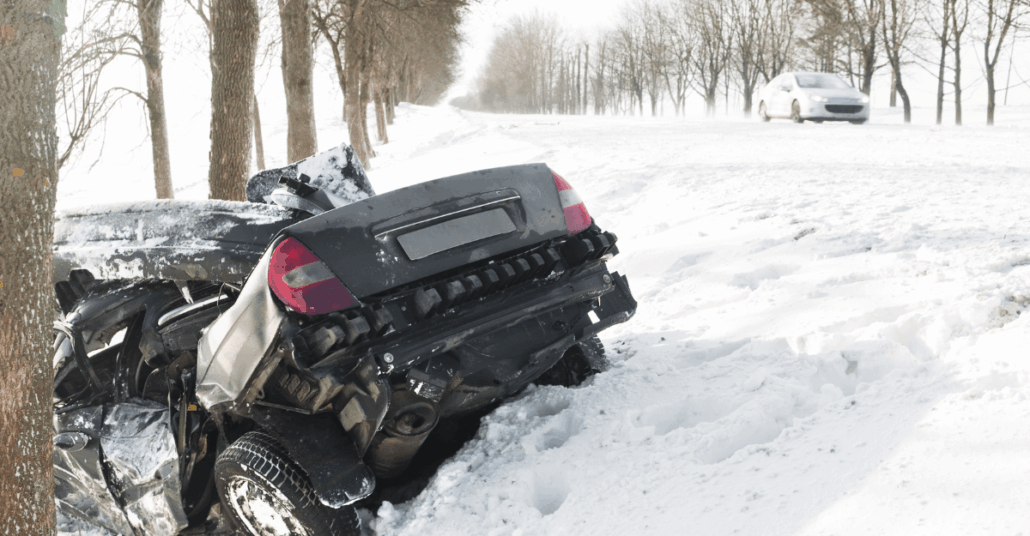
When the sounds of holiday music are replaced by the screech of tires on ice and the crunch of metal, the consequences are devastating. A serious car accident during the holidays leaves not just physical and financial damage but also casts a long shadow over a time meant for joy. Navigating the aftermath of a winter crash involves complex challenges that are not present in other types of collisions.
What Makes the Holiday Season a Peak Time for Accidents in the Chicago Suburbs?
The period from Thanksgiving through New Year’s Day consistently sees a spike in traffic accidents. This is not a coincidence but the result of a convergence of several high-risk factors. While any single factor can lead to a collision, their combination during the holidays creates a particularly hazardous environment on our local roads.
- Increased Traffic Volume: Local roads like Harlem Avenue and U.S. Route 6, along with major arteries like I-80 and I-57, become far more congested. This includes local shoppers, families visiting from out of town, and commercial delivery trucks all sharing the same space. Higher density traffic reduces the margin for error and increases the likelihood of multi-vehicle pileups.
- Driver Stress and Distraction: The pressure to get to a family dinner, find the perfect gift, or navigate to an unfamiliar location can lead to distraction and impatience. Drivers may be more focused on their holiday to-do list than on the road ahead, leading to errors in judgment like following too closely or making abrupt lane changes.
- Impaired Driving: Holiday parties and family get-togethers often involve alcohol. Despite widespread awareness campaigns, drunk and drugged driving incidents rise sharply during this period. An impaired driver’s slowed reaction time is especially dangerous on slick winter roads.
- Driver Fatigue: Many people travel long distances to be with loved ones. Driving for hours on end, often late at night or in poor weather, can lead to significant fatigue. A drowsy driver can be just as dangerous as an intoxicated one.
- Volatile Winter Weather: Chicagoland weather is notoriously unpredictable. A clear morning can give way to a sudden snow squall in the afternoon. This volatility catches many drivers off guard, leading to accidents on roads that were safe just hours before.
The Unique Dangers of Winter Driving in Orland Park and Surrounding Areas
Driving in a Chicago winter is a skill learned through experience. However, even the most seasoned driver can be caught off guard by hazardous conditions that are often invisible or develop suddenly. It is a driver’s legal responsibility to adjust to these conditions, and failing to do so can be a basis for negligence.
- Black Ice: This is one of the most treacherous winter hazards. Black ice is a thin, transparent layer of ice that forms on the road surface, making it appear merely wet. It frequently forms on bridges, overpasses, and in shaded areas where temperatures are colder. A driver who fails to reduce speed on a bridge, even if the main road seems clear, may be found negligent if they lose control and cause a crash.
- Lake-Effect Snow: The proximity to Lake Michigan means communities in Cook and Will Counties can experience sudden, intense bands of lake-effect snow. These squalls can create near-whiteout conditions in a matter of minutes, drastically reducing visibility. A driver who does not slow down or turn on their headlights in these conditions is not exercising reasonable care.
- Poor Visibility: Beyond active snowfall, winter brings shorter daylight hours and low, gray light that can make it difficult to judge distances. Blowing and drifting snow can further obscure lane markings and road signs.
- Melt and Refreeze Cycles: It is common for snow to partially melt during the day and then refreeze overnight as temperatures drop. This creates unpredictable patches of ice, especially in parking lots and on secondary roads that may not be as well-salted as major highways.
Common Causes of Holiday and Winter Vehicle Collisions
While weather is a contributing factor, the vast majority of winter accidents are caused by driver error. A driver has a duty to adapt their behavior to the road conditions. When they fail in this duty, they can be held liable for the harm they cause.
Common negligent actions include:
- Driving Too Fast for Conditions: This is the most frequent cause of winter crashes. The posted speed limit is for ideal conditions, not for an icy or snow-covered road. A driver can be ticketed and found at fault for a crash even if they were driving at or below the speed limit if that speed was unsafe for the conditions.
- Following Too Closely: Stopping distances can increase by as much as ten times on ice and snow. Tailgating in winter weather is exceptionally reckless and a clear sign of negligence.
- Improper Braking or Turning: Slamming on the brakes or making a sharp turn on a slick surface can cause a vehicle to skid out of control. Prudent drivers know to brake early and gently and to make smooth, deliberate turns.
- Failure to Clear a Vehicle of Snow and Ice: Illinois law requires drivers to clear their windshields, windows, and lights. Additionally, large sheets of ice or snow flying off a car or truck roof can strike another vehicle, causing a serious accident.
- Driving While Distracted: Programming a GPS to a relative’s house, texting holiday greetings, or managing children in the back seat are all distractions that can lead to a devastating winter collision.
- Driving Under the Influence (DUI): The combination of alcohol or drugs with treacherous road conditions is a recipe for disaster.
What Steps Should You Take Immediately After a Winter Car Wreck?
The moments after a crash are disorienting and stressful, but the actions you take can protect your health and your potential legal claim.
- Ensure Your Safety: If possible, remain in your vehicle with your seatbelt on and activate your hazard lights. Exiting your vehicle on an icy highway can be extremely dangerous. If you must get out, do so with extreme caution and get to a safe location away from traffic.
- Call 911 Immediately: Report the accident to the police. Specify your location and inform them of any known injuries. A police report is a vital piece of evidence. Request a response from the Orland Park Police Department, Cook County Sheriff, or Illinois State Police, depending on your location.
- Document Everything: If you can do so safely, use your phone to take pictures and videos of the scene. Capture the positions of the vehicles, the damage to all cars involved, any visible skid marks or debris, and the surrounding road conditions. Take specific photos of any ice patches or snow accumulation that contributed to the crash.
- Exchange Information: Get the other driver’s name, address, phone number, driver’s license number, and insurance information. Also, collect contact information from any witnesses who saw the accident.
- Seek Medical Attention: You must get a medical evaluation, even if you feel fine. Adrenaline from the crash can mask serious injuries like concussions or internal bleeding. Going to an emergency room at a local hospital, like Palos Community Hospital or Silver Cross Hospital, creates a medical record that links your injuries to the accident.
- Avoid Admitting Fault: When speaking to the other driver or the police, stick to the facts of what happened. Do not apologize or say anything that could be interpreted as an admission of fault, as insurance companies will use this against you.
- Notify Your Insurer: Report the accident to your own insurance company as soon as you can. However, you are not obligated to give a recorded statement to the other driver’s insurance company. It is wise to speak with an attorney before doing so.
How Do Insurance Companies Approach Winter Accident Claims?
Insurance adjusters are trained to protect their company’s bottom line by minimizing payouts. In winter accident claims, they often use the weather as a tool to devalue or deny a claim.
One common tactic is to label the crash an “act of God,” implying that no one was at fault because the weather was the cause. This is almost never legally accurate. Weather is a condition, not a cause. The cause is a driver’s reaction—or failure to react appropriately—to that condition.
Another strategy is to use the principle of comparative negligence. In Illinois, if you are found to be partially at fault for an accident, your compensation can be reduced by your percentage of fault. An adjuster might argue that while their insured driver slid through a stop sign, you were also at fault for driving slightly too fast for the icy conditions. This is an attempt to shift blame and reduce the amount they have to pay.
Proving Negligence in a Snow or Ice-Related Crash
A successful personal injury claim requires proving that the other driver was negligent. This means demonstrating four key elements:
- Duty: Every driver has a legal duty to operate their vehicle with reasonable care. In winter, this duty is heightened and includes the responsibility to slow down, increase following distance, and remain vigilant for hazards.
- Breach: The driver breached this duty. For example, driving the speed limit on an obviously icy road is a breach of the duty to exercise reasonable care. Texting while driving in a snowstorm is another clear breach.
- Causation: The driver’s breach of duty directly caused the accident and your injuries. It must be shown that the crash would not have happened if the driver had been operating their vehicle safely for the conditions.
- Damages: You suffered actual harm, which can include medical expenses, lost income, vehicle damage, and physical pain and suffering.
Evidence is essential to proving these elements. A thorough investigation may involve gathering the police report, witness statements, photos of the crash scene, and even expert testimony from accident reconstructionists who can analyze the physics of a low-traction collision.
What Types of Compensation Can Be Recovered in an Orland Park Accident Claim?
If you have been injured by a negligent driver, Illinois law allows you to seek compensation for the full range of your losses. These damages are generally categorized in two ways:
Economic Damages: These are the tangible financial losses resulting from the accident. They are calculable and can be proven with bills, receipts, and employment records. This includes:
- All past and future medical bills (ambulance, ER visit, surgery, physical therapy)
- Lost wages and income
- Loss of future earning capacity if you are disabled
- Cost of prescription medications and medical devices
- Property damage to your vehicle
Non-Economic Damages: These damages compensate for the intangible, personal losses that have affected your quality of life. While they do not have a specific price tag, they are very real. This includes:
- Pain and suffering
- Emotional distress and mental anguish
- Disfigurement and scarring
- Loss of a normal life or loss of enjoyment of activities
- Permanent disability
Contact a Knowledgeable Orland Park Car Accident Attorney
The aftermath of a holiday car accident is overwhelming. You should be focused on your physical and emotional recovery, not on battling an insurance company that wants to blame the weather for a driver’s poor choices. An invisible patch of ice or a sudden snow squall does not give a driver a free pass for negligent behavior. If you or a family member has been injured in a winter car wreck in Orland Park, Chicagoland, or the surrounding suburbs, you do not have to navigate this process alone.
Contact the Fotopoulos Law Office today at 708-942-8400 for a free, confidential consultation. We can review the facts of your case, explain your legal options, and help you pursue the financial stability you need to move forward.






Leave a Reply
Want to join the discussion?Feel free to contribute!