

Why It’s Important to Follow Doctor’s Orders After a Car Crash in Bourbonnais
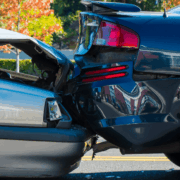
The sudden, violent nature of a car accident can shatter a normal day in Bourbonnais. One moment you might be driving on Route 50 (Kinzie Avenue) or navigating the busy traffic near Northfield Square Mall; the next, you are dealing with the sound of crunching metal, the deployment of airbags, and a rush of adrenaline. In the disorienting moments that follow a collision on a Kankakee County road, your first thoughts are about safety, your passengers, and the immediate damage.
If you are injured, your journey likely continues at a local emergency room, such as AMITA Health St. Mary’s Hospital in Kankakee or Riverside Medical Center. After hours of being examined, scanned, and questioned, you are often discharged with a stack of papers and a primary instruction: “Follow up with your doctor.” In the fog of the following days, as you deal with insurance calls and car repairs, this advice might seem like just another task on a long list. However, following that medical advice is one of the single most significant actions you can take—not only for your physical health but also for the future of any potential personal injury claim.
The Two Pillars: Your Health and Your Legal Claim
After you have been injured by another’s negligence, you are facing two distinct but deeply intertwined battles.
- Your Physical Recovery: This is your primary concern. Your goal is to heal as completely and quickly as possible, restoring your quality of life and ability to function.
- Your Legal Claim: This is the financial mechanism for recovery. Its purpose is to get you compensation for your medical bills, lost wages, and the personal harm you have endured.
These two pillars are completely dependent on each other. You cannot have a successful legal claim without documenting your physical recovery process. Likewise, your physical recovery may depend on the financial resources secured through your legal claim. Following your doctor’s orders is the one action that supports both pillars at the same time.
What Does “Following Doctor’s Orders” Really Involve?
When legal and medical professionals talk about adhering to a treatment plan, it is not a vague suggestion. It means actively participating in your own recovery in a way that is documented and consistent.
Insurance adjusters will look for proof that you took your injuries seriously. A comprehensive “treatment plan” often includes a combination of the following actions:
- Attending all follow-up appointments: This includes the initial follow-up with your primary care physician and any subsequent appointments with specialists like orthopedic surgeons, neurologists, or pain management doctors.
- Completing all prescribed physical therapy: If a doctor prescribes six weeks of physical therapy, it is expected that you attend all sessions. Stopping halfway because you “feel a little better” can be a major problem.
- Filling and taking prescribed medications: Your pharmacy records show that you filled the prescriptions, which demonstrates you were in enough pain or discomfort to need them.
- Undergoing recommended diagnostic tests: This includes getting the MRI, CT scan, X-rays, or nerve conduction studies that your doctor ordered to diagnose the full extent of your injuries.
- Heeding physical restrictions: If your doctor orders you not to lift more than 10 pounds or to avoid repetitive motions, you must follow those instructions.
- Reporting new or worsening symptoms: If your pain changes or a new symptom appears, you must report it to your doctor immediately so it can be documented.
How Insurance Adjusters View Gaps in Medical Treatment
It is helpful to view this from the perspective of the at-fault driver’s insurance adjuster. The adjuster’s job is to protect their company’s financial interests by paying out as little as possible on your claim. They are not medical professionals, so they analyze your claim’s value almost entirely through one lens: your medical records.
When an adjuster reviews your file, they are specifically looking for “gaps in treatment.” A gap is any unexplained break or delay in your medical care.
- Example 1: You went to the ER in Bourbonnais, were told to follow up with your doctor in 3-5 days, but you waited three weeks to make the appointment.
- Example 2: Your doctor referred you to a specialist, but you never scheduled the appointment.
- Example 3: You were prescribed 12 sessions of physical therapy but only attended five.
To the adjuster, these gaps are not seen as you being busy or “toughing it out.” They are seen as evidence. The adjuster will use these gaps to argue:
- “The injuries were not that serious.” The argument is that if you were really in pain, you would have gone to the doctor without delay.
- “The injury must have healed.” If you stopped going to physical therapy, their assumption is that you were no longer in pain and had fully recovered.
- “Something else must have caused the injury.” If there is a two-month gap in your treatment and you suddenly report new, severe pain, the adjuster will argue that a new event (not the original car crash) must have happened in that gap to cause your new pain.
These arguments give the adjuster justification to devalue your claim and make a low-ball settlement offer, forcing you to accept less than you deserve.
Medical Records: The Official Evidence of Your Injury
In any personal injury claim, the burden of proof is on you, the injured party. You must prove that the other driver’s negligence caused the crash and that the crash caused your injuries. Your medical records are the single most important piece of evidence you have.
Your word that you are in pain is subjective. A medical record from a licensed physician is considered objective evidence.
Well-documented medical records establish a clear timeline and prove several key elements of your case:
- Causation: The emergency room records from AMITA Health St. Mary’s or Riverside create a direct, documented link between the Bourbonnais car accident and your injuries.
- Severity: The notes, test results, and specialist reports show the extent of your injuries, whether it is a “soft tissue” sprain, a herniated disc, or a traumatic brain injury.
- Duration: A consistent record of physical therapy and follow-up visits over weeks or months provides a clear picture of your pain and suffering and the recovery process.
- Cost: Every visit and procedure generates a bill. These bills form the basis of your “economic damages,” which you are entitled to claim.
Without this consistent, unbroken chain of medical records, your claim becomes weak and difficult to prove.
What is the “Duty to Mitigate Damages” in Illinois?
The law in Illinois includes a concept often called the “duty to mitigate damages.” In simple terms, this means that an injured person has a legal responsibility to take reasonable steps to prevent their injuries from getting worse.
You cannot let your condition worsen through your own inaction and then expect the at-all-fault party to pay for the worsened condition.
Ignoring your doctor’s recommendations is a classic example of failing to mitigate your damages. If your doctor tells you to stay off your feet for a week and you instead go on a long hike, and as a result, your ankle fracture gets worse and requires surgery, the defense can argue they are not responsible for the cost of that surgery. They will claim the surgery was only needed because you failed to follow medical advice, not because of the original crash.
This same logic applies to missing appointments or skipping therapy. The insurance company will argue that your recovery took longer, or your pain was more severe, because you failed to follow the recommended treatment plan.
What If I Have a Pre-Existing Condition?
This is a common concern. Many people have pre-existing back problems, old sports injuries, or arthritis. They worry that this will prevent them from making a claim. In reality, it makes following medical advice even more important.
It is true that you cannot be compensated for a condition that existed before the crash. However, you are absolutely entitled to compensation if the crash aggravated or worsened that pre-existing condition.
The only person who can scientifically separate the “old” injury from the “new” aggravation is your doctor. Your physician’s medical records will document how the trauma from the car crash took your baseline, manageable condition and made it acute, painful, and debilitating.
If you stop treatment, you leave the insurance company free to argue that all of your pain is just from your old condition, and they will refuse to pay.
Common Medical Treatment Mistakes After a Car Crash
A successful personal injury claim can be protected by avoiding these common and costly mistakes.
- Refusing medical transport at the scene: Adrenaline is powerful. You may be seriously injured and not feel it. Refusing an ambulance or telling the Bourbonnais police, “I’m fine,” will be used against you. Always get checked out.
- Delaying the first appointment: Do not wait a week or two to see a doctor. That “gap” is a red flag to insurers. Get examined within 24-72 hours.
- Skipping physical therapy sessions: PT can be inconvenient and painful, but it is one of the first things an adjuster checks. Missing appointments implies you are not committed to your recovery or that the therapy is not necessary.
- Stopping treatment prematurely: Do not stop going to your doctor just because you feel a little better. You must continue treatment until your doctor officially releases you or declares you have reached “Maximum Medical Improvement” (MMI).
- Being non-compliant with restrictions: If your doctor says “no lifting,” and you post photos on social media of yourself helping a friend move, you have significantly damaged your claim.
What If I Can’t Afford the Treatment My Doctor Orders?
This is a very real and frightening problem. You may not have health insurance, or your deductible and co-pays may be too high. This is a trap: you are in pain and cannot afford the care, but you know that not getting the care will harm your legal case.
This is a situation where you must speak to a personal injury attorney immediately.
Do not just stop going to the doctor. An attorney can help you explore options. Some medical providers in the Kankakee County area are willing to treat accident victims on the basis of a “medical lien.” A lien is a legal agreement that states the provider will wait for payment and be paid directly out of any future settlement or court award.
This allows you to get the unbroken, consistent medical care you need for your health and your claim, without paying out-of-pocket costs upfront.
How an Attorney Uses Your Medical Records to Build Your Case
A personal injury attorney does not provide medical care. Instead, we are the ones who gather, organize, and present the story that your medical records tell.
When you work with a law firm, our team will:
- Gather all records: We will send formal requests to every provider you have seen—from the Bourbonnais Fire Department ambulance crew, to the ER at Riverside, to your family doctor, and every physical therapy clinic.
- Organize the evidence: We review these hundreds of pages of records and organize them to build a clear narrative of your injury and recovery.
- Handle the insurance company: We provide the adjuster with the complete and organized medical file, which prevents them from claiming they are “missing” information.
- Calculate your damages: We use the medical bills to prove your economic losses and the medical notes (describing your pain, limitations, and prognosis) to argue for the value of your non-economic damages (pain and suffering).
Your commitment to your medical treatment plan creates the high-quality evidence we need to advocate on your behalf and demand the full compensation you are owed.
Contact a Bourbonnais Car Accident Attorney
The days and weeks after a car accident are stressful and confusing. You should be able to focus on one thing: getting better. Unfortunately, the insurance and legal process demands more. Failing to follow your doctor’s orders can have serious consequences for your health and your ability to be financially whole again. If you or a loved one has been injured in a car crash in Bourbonnais or anywhere in Kankakee County, you do not have to manage this alone. Contact the Fotopoulos Law Office today at 708-942-8400 for a free, confidential consultation. We can review the facts of your case, explain your legal options, and help you navigate the complex path of medical treatment and legal recovery.







Leave a Reply
Want to join the discussion?Feel free to contribute!