
Orland Park Multi-Vehicle Accident Lawyers
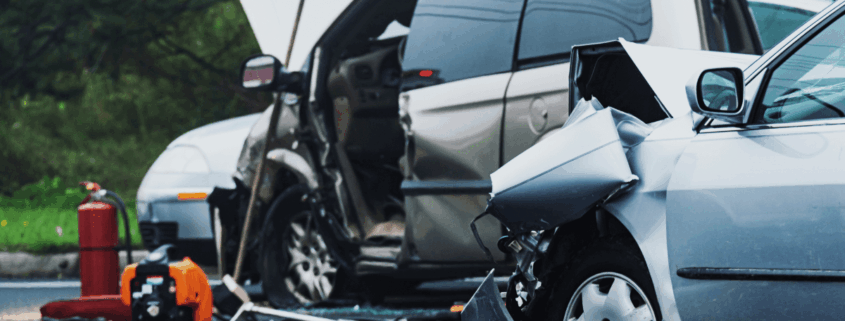
Collisions involving three or more vehicles, often called pile-ups or chain-reaction accidents, are among the most chaotic and destructive events on our roadways. The initial impact is often just the beginning of a terrifying sequence of collisions, leaving a tangled scene of wreckage and devastation. For those caught in such an event, the physical injuries can be severe, and the emotional trauma profound. The aftermath presents a bewildering web of challenges, from determining fault among multiple drivers to navigating a labyrinth of competing insurance claims.
If you or a loved one has been injured in a multi-car collision in Orland Park or the surrounding communities, the path forward can seem daunting. At Fotopoulos Law, we understand that getting injured in a multi-vehicle crash can take a major physical, emotional, and financial toll on victims and their families, and we are here to provide the strong legal guidance you need during this difficult time. Call us today at 708-942-8400 for a free consultation and case assessment.
What Are Multi-Vehicle Accidents in Orland Park, IL?
A multi-vehicle accident is any collision involving three or more vehicles. These incidents are distinct from two-car accidents due to their complexity and the cascading nature of the impacts. They commonly occur on high-speed roadways like highways and interstates, but can happen on any road where a single act of negligence triggers a series of subsequent crashes.
These accidents can unfold in several ways, such as:
- Chain Reaction: A common scenario where a vehicle hits another from behind, pushing it into the vehicle ahead, and so on, creating a “chain” of rear-end collisions.
- Pile-Up: Often occurs in low-visibility conditions where multiple vehicles, unable to stop in time, crash into an initial collision scene, creating a widespread and chaotic pile-up.
- Lane-Change Incidents: A vehicle making an unsafe lane change can sideswipe another car, causing it to lose control and collide with vehicles in other lanes, triggering a multi-car incident.
The legal and factual complexities of these cases grow with every vehicle involved, making a thorough and immediate investigation a high priority.
Multi-Vehicle Accidents in Orland Park, IL
A multi-vehicle accident is any collision involving three or more vehicles. These incidents are distinct from two-car accidents due to their complexity, the increased potential for severe injury, and the cascading nature of the impacts. While they commonly occur on high-speed roadways like I-80, I-57, or other major state routes near Orland Park, they can happen on any road where a single act of negligence triggers a series of subsequent crashes.
The immediate aftermath of a multi-vehicle collision is often characterized by chaos. The sheer number of victims, damaged vehicles, and overlapping collision sites makes documentation and initial responder assessment incredibly difficult. The legal and factual complexities of these cases grow exponentially with every vehicle involved, making a thorough and immediate investigation a high priority for anyone seeking compensation.
How Multi-Vehicle Accidents Unfold
These accidents can unfold in several ways, often complicating the initial determination of who struck whom first.
- Chain Reaction: This is the most common scenario, often starting with a rear-end collision. Vehicle A hits Vehicle B, pushing Vehicle B into Vehicle C, and so on. In this sequence, the initial impact is clear, but subsequent drivers (B, C, etc.) may also face scrutiny for failing to maintain adequate distance from the car in front of them, even if the primary fault lies with Vehicle A.
- Pile-Up: Often occurring in low-visibility conditions such as heavy fog, snow, or sudden dust storms, a pile-up involves multiple vehicles crashing into an initial collision scene because drivers are unable to stop in time. This creates a widespread, chaotic crash zone where the damage is extensive and the sequence of impacts is intertwined.
- Lane-Change Incidents: A driver making an unsafe or sudden lane change can sideswipe or cut off another car (Vehicle B), causing Vehicle B to lose control. Vehicle B may then cross into opposing traffic or swerve into another lane, colliding with vehicles (C and D) that were otherwise driving safely. This creates a complex fault matrix involving the lane-changing driver and possibly the roadway design or condition if it contributed to the loss of control.
- Secondary Collisions: In some cases, a first accident occurs, and drivers slow down to pass it, but a speeding vehicle coming from behind fails to recognize the slowed traffic, resulting in a large second collision entirely separate from the first.
Why Multi-Vehicle Pile-Ups Happen
While each multi-car accident is unique, most can be traced back to one or more acts of negligence. Identifying the root cause is the foundational step in establishing liability.
Driver Error and Negligence
The actions of a single driver are frequently the catalyst for a chain-reaction crash.
- Following Too Closely (Tailgating): The most frequent cause of rear-end collisions that can easily escalate into a pile-up. Drivers who fail to leave a safe following distance—the required three-second minimum—cannot react in time to sudden stops initiated by the vehicles ahead, especially at highway speeds.
- Distracted Driving: Using a cell phone, adjusting the GPS, eating, or any other activity that takes a driver’s attention off the road can have catastrophic consequences in milliseconds. A driver looking down for even a few seconds will miss a sudden brake-light flash ahead, triggering the first high-speed impact.
- Excessive Speed: Speeding dramatically reduces a driver’s reaction time and increases braking distance. A speeding vehicle that causes an initial collision often does so with such force that it propels other vehicles into one another, multiplying the total damage and injury.
- Impaired Driving: Operating a vehicle under the influence of alcohol or drugs severely impairs judgment, coordination, and reaction time, making it a potent cause of all types of accidents, particularly those involving rapid, multiple impacts.
- Aggressive or Reckless Driving: Unsafe lane changes, weaving through traffic, and ignoring traffic signals can all initiate a rapid sequence of events leading to a multi-vehicle collision.
- Driver Fatigue: Drowsy driving can be as dangerous as impaired driving, slowing reflexes and impairing decision-making, leading to tragic outcomes on long stretches of road.
Hazardous Environmental and Road Conditions
The environment can play a significant role in causing or contributing to these accidents, often compounding driver error.
- Adverse Weather: Rain, snow, ice, and fog dramatically reduce visibility and tire traction. Drivers who fail to adjust their speed for these conditions are often unable to stop, leading to large-scale pile-ups.
- Poor Road Maintenance: Government entities, such as the Illinois Department of Transportation (IDOT) or local municipal maintenance departments, may be held responsible if a crash is directly caused by large potholes, uneven pavement, unmarked construction hazards, or poorly designed roadways that contribute to a loss of control.
- Obstructions and Debris: Debris from other vehicles, fallen cargo, or objects that unexpectedly land in the roadway can cause a driver to swerve suddenly or brake unexpectedly, triggering a chain reaction involving following vehicles.
- Poor Lighting: Insufficient street lighting can make it difficult to see stopped vehicles or hazards in the road, particularly at night, leading to preventable rear-end impacts.
Vehicle Malfunctions
Sometimes, the accident is not the driver’s fault but the result of a critical equipment failure.
- Brake Failure: Defective or poorly maintained brakes can prevent a driver from stopping, leading to a high-impact collision. Liability may rest with the vehicle owner/driver for poor maintenance, or the repair shop for improper service.
- Tire Blowouts: A sudden tire failure due to poor quality or damage can cause a driver to lose control, sending the vehicle into adjacent lanes of traffic.
- Manufacturing Defects: If a flaw in the vehicle’s design or a defective component (such as steering, suspension, or airbags) causes or exacerbates the accident, the vehicle manufacturer or the parts supplier may be held liable under product liability laws.
The Challenge of Determining Liability in Multi-Vehicle Crashes
In a standard two-car accident, liability is often a binary equation: one driver is at fault, and the other is the victim. However, once a third, fourth, or fifth vehicle is added to the mix, the legal landscape shifts from a straight line to a complex web of competing claims. In Illinois, assigning fault in these “pile-up” scenarios is incredibly complex due to the state’s specific legal doctrines and the aggressive tactics of insurance providers.
Understanding Illinois’s Modified Comparative Negligence
The bedrock of personal injury law in Illinois is the doctrine of modified comparative negligence. This rule dictates how much compensation a victim can receive based on their level of responsibility for the crash.
- The 51% Bar: Under Illinois law, an injured party can only recover damages if they are found to be less than 50% responsible for the accident. If a jury determines you were 51% at fault, you receive nothing.
- Proportional Reductions: If you are found to be 20% at fault, your total compensation is reduced by 20%. For example, a $100,000 award would be reduced to $80,000.
- Multiple Defendants: In a multi-car crash, the “pool” of 100% fault is divided among all parties. Determining whether a driver is 10%, 30%, or 60% liable is the primary battleground in these cases.
Case Study: The Chain Reaction Anatomy
To understand how fault is apportioned, consider a common four-car pile-up scenario on an Illinois highway:
- Driver A (The Catalyst): Tailgates and initiates the first rear-end collision with Driver B.
- Driver B (The Middleman): Stops correctly but is pushed into the car ahead.
- Driver C (The Distracted): Fails to brake in time because they were checking a GPS notification and slams into Driver B.
- Driver D (The Speeding): Skids on a patch of ice and hits Driver C, having failed to adjust their speed for winter road conditions.
The Apportionment Battle
In this scenario, while Driver A is the primary cause, they are rarely the only negligent party.
- Driver C may be held 30% liable because their distraction prevented them from avoiding a secondary impact.
- Driver D may be held 20% liable for “driving too fast for conditions,” a common Illinois citation, even if the driver was technically under the posted speed limit.
- Driver A’s defense will likely argue that if C and D had been paying attention or driving more slowly, the injuries would have been significantly less severe.
Why Multi-Car Claims Are Difficult to Resolve
Because there are multiple insurance policies involved, these cases often take longer to resolve than standard collisions.
- The “Blame Game” Between Insurers
Insurance companies are profit-driven entities. In a multi-car crash, Insurer A will try to shift 10% of the blame to Insurer C, who in turn will try to shift it back to the victim. This cross-fire of “finger-pointing” is designed to lower the individual payout of each company.
- Identifying the “First Impact”
The physics of the impact is vital. Did Driver C hit Driver B before Driver A hit Driver B? The sequence of “thuds” heard by witnesses and the data retrieved from Event Data Recorders (EDRs) or “black boxes” are often the only way to prove who started the chain reaction.
- The Complexity of Filing Multiple Claims
Victims often cannot rely on a single claim. They must frequently file against multiple drivers simultaneously. This requires:
- Managing different sets of adjusters.
- Coordinating “policy limits” (if one driver has a $25,000 limit but the damages are $100,000, the victim must look to other negligent drivers to bridge the gap).
- Potential “Underinsured Motorist” (UIM) claims through the victim’s own insurance.
Essential Evidence for Multi-Vehicle Litigation
To accurately apportion fault under Illinois law, legal teams must gather highly technical evidence:
- Forensic Accident Reconstruction: Specialists use skid mark lengths, vehicle crush patterns, and debris fields to determine speeds and angles of impact.
- Digital Footprints: Cell phone records can prove if Driver C was distracted, while EDR data can show if Driver D actually applied their brakes.
- Dashcam and Surveillance Footage: With the prevalence of dashcams and highway “I-PASS” cameras, video evidence is increasingly the “smoking gun” in chain-reaction crashes.
- Witness Statements: In a pile-up, the accounts of disinterested third parties (those not involved in the crash) are weighted much more heavily than the accounts of the drivers involved.
Severe Injuries and Damages
The intensity of multiple impacts common in these accidents often results in more severe injuries than a typical fender-bender. Victims often face a long and painful recovery, accompanied by significant financial strain.
Common injuries include:
- Traumatic Brain Injuries (TBI): Caused by the head striking a steering wheel, window, or interior component, or from the rapid back-and-forth movement (coup-contrecoup) common in whiplash.
- Spinal Cord Injuries (SCI): Damage to the vertebrae or spinal cord can result in partial or complete paralysis.
- Fractures and Broken Bones: Limbs are often trapped or crushed between deforming metal, leading to complex breaks requiring surgery and lengthy rehabilitation.
- Internal Organ Damage and Hemorrhage: The massive forces involved can cause internal organs to rupture or bleed.
- Severe Whiplash and Soft Tissue Damage: While often less visible, severe whiplash can lead to chronic pain and lifelong mobility issues.
The damages sought in these claims are substantial and include: current and future medical expenses, rehabilitation costs, lost wages and loss of future earning capacity, property damage, and compensation for pain and suffering, emotional distress, and loss of normal life enjoyment.
The Investigation and Evidence Gathering Process
Given the multiple parties and complex liability, meticulous evidence gathering is non-negotiable. The legal team handling the claim must move quickly to secure evidence before it is lost or destroyed.
- Police Reports (Traffic Crash Report): This official document outlines the initial findings, cites traffic violations, and often includes the officer’s preliminary determination of fault.
- Witness Testimony: The accounts of unaffected third parties are invaluable, especially in chaotic pile-ups where drivers may offer conflicting statements.
- Vehicle Data Recorders (Black Boxes): Most modern vehicles contain Event Data Recorders (EDRs) that capture critical information—speed, braking, throttle input, and seatbelt usage—in the seconds leading up to a crash. Securing this data is crucial for reconstructing the sequence of events.
- Photographs and Video: Imagery of the accident scene, including road conditions, vehicle positioning, and damage, provides tangible proof. Surveillance footage from nearby businesses or traffic cameras can offer irrefutable evidence of how the pile-up began.
- Accident Reconstruction: In the most complex cases, a professional accident reconstructionist may be hired to apply principles of physics and engineering to analyze the evidence and determine the precise speed and force of each impact.
Severe Injuries Common in Multi-Car Collisions in Orland Park, IL
The physics of a multi-vehicle accident often involve multiple impacts from different directions, subjecting the human body to immense and violent forces. This frequently results in injuries that are severe, permanent, and life-altering.
- Traumatic Brain Injuries (TBIs): The violent jolting of the head can cause the brain to strike the inside of the skull, leading to concussions or more severe TBIs that affect cognitive function, memory, and motor skills.
- Spinal Cord Injuries: Damage to the vertebrae or spinal cord itself can result in partial or complete paralysis, chronic pain, and a lifetime of medical dependency.
- Whiplash and Neck Injuries: The rapid back-and-forth motion of the head in a rear-end collision can cause severe damage to the soft tissues of the neck, resulting in long-term pain and mobility issues.
- Complex Bone Fractures: The force of multiple impacts can cause numerous broken bones, including crushed or shattered fractures that may require multiple surgeries and extensive rehabilitation.
- Internal Organ Damage: Blunt force trauma can lead to internal bleeding, ruptured organs, and other life-threatening conditions that may not be immediately obvious at the scene.
- Crush Injuries: Occupants can be pinned inside their vehicles, leading to severe crush injuries that can result in compartment syndrome, extensive tissue damage, and potential amputation.
- Wrongful Death: Tragically, the severity of these pile-ups means that fatalities are common. In these cases, surviving family members may pursue a wrongful death claim to seek justice for their profound loss.
The extensive medical treatment, long-term care, and inability to work that follow these injuries can create immense financial pressure on victims and their families.
Why is Determining Fault So Difficult in a Pile-Up?
Assigning liability in a two-car accident is often straightforward. In a multi-vehicle pile-up, it is anything but. The chaos of the scene, conflicting accounts from drivers, and the complex sequence of impacts create significant challenges.
Illinois follows a “modified comparative negligence” rule. This means that you can still recover damages even if you were partially at fault for the accident, as long as your share of the fault is not more than 50%. If you are found to be more than 50% responsible, you cannot recover any compensation. In a multi-car pile-up, insurance companies for each involved party will work tirelessly to shift blame to others to minimize their own payout. An attorney’s role is to build a case that accurately assigns fault and protects your right to compensation.
Several factors complicate the determination of fault:
- The First Impact: Identifying the driver who caused the initial collision is a primary goal. This driver often bears a significant portion of the liability for the ensuing chain reaction.
- Subsequent Impacts: Drivers who were following too closely or were distracted may also be found partially at fault for failing to avoid the collision ahead of them, even if they did not cause the first impact.
- Conflicting Testimonies: Each driver will have a different perspective on how the accident unfolded, and their accounts are often contradictory.
- Lack of Evidence: In the confusion, physical evidence can be moved or lost, and witnesses may be difficult to locate.
Who Can Be Held Liable for a Multi-Vehicle Accident?
A thorough investigation often reveals that liability is shared among multiple parties. A successful personal injury claim depends on identifying every party whose negligence contributed to the crash.
Potentially liable parties may include:
- One or More Drivers: Any driver who was speeding, distracted, impaired, or otherwise driving negligently can be held liable.
- Trucking Companies: If a commercial truck was involved, its employer could be liable for the driver’s negligence, as well as for negligent hiring, poor training, or improper vehicle maintenance.
- Vehicle Manufacturers: If a mechanical failure or design defect in any of the involved vehicles caused or contributed to the accident.
- Government Agencies: A city, county, or state entity could be liable if the accident was caused by poor road design, inadequate maintenance, or a failure to post warnings about known hazards.
- Cargo Companies: If unsecured cargo fell from a vehicle and created a hazard that led to the pile-up.
| Potentially Liable Party | Reason for Liability |
| One or More Drivers | Speeding, distracted, impaired, or otherwise driving negligently |
| Trucking Companies | Driver’s negligence, negligent hiring, poor training, improper vehicle maintenance |
| Vehicle Manufacturers | Mechanical failure or design defect in the involved vehicles |
| Government Agencies | Poor road design, inadequate maintenance, and failure to post warnings about known hazards |
| Cargo Companies | Unsecured cargo fell from a vehicle and created a hazard |
What to Do After a Multi-Vehicle Accident in Orland Park
The steps you take in the minutes, hours, and days after a multi-car pile-up can protect your health and your legal rights.
- Prioritize Safety and Medical Care: First, assess your injuries and the safety of your location. If you can do so safely, move your vehicle out of active traffic lanes. Call 911 immediately to report the accident and request emergency medical assistance. Always accept a medical evaluation, even if you feel fine. Some serious injuries may not show symptoms right away.
- Report the Incident: Speak with the police officers who arrive at the scene. Provide a factual account of what happened, but avoid admitting fault or speculating about the cause. Make sure you get a copy of the police report number.
- Document Everything: If you are physically able, use your phone to take extensive photos and videos of the entire scene. Capture the positions of all vehicles, damage to every car, skid marks, road conditions, traffic signals, and any relevant landmarks.
- Gather Information: Collect the names, contact information, insurance details, and driver’s license numbers from all drivers involved. Also, get the names and contact information of any witnesses. Their independent accounts can be invaluable.
- Do Not Give a Recorded Statement: You will likely receive calls from multiple insurance adjusters. You are not obligated to provide them with a detailed recorded statement. Politely decline and inform them that your attorney will be in contact.
- Contact a Knowledgeable Attorney: Before you engage with insurance companies, speak with an experienced multi-vehicle accident lawyer. The complexities of these cases require immediate legal guidance to ensure evidence is preserved and your rights are protected from the start.
Contact Our Orland Park Multi-Vehicle Accident Lawyers Today
If you or a family member has been injured in a chain-reaction crash or highway pile-up, you do not have to navigate the complex legal and insurance aftermath on your own. The physical recovery is challenging enough without the added burden of fighting for the compensation you are entitled to. We will conduct a comprehensive investigation, work with leading experts, and handle all communications with the multiple insurance companies involved. Our goal is to hold every negligent party accountable and secure the maximum financial recovery for your medical bills, lost wages, pain and suffering, and other damages.
Let us handle the legal complexities so you can focus on what is most important: healing. Contact us today at 708-942-8400 for your free, no-obligation consultation to learn how we can help.