
Backing Out of a Parking Space in Kankakee: Who Is at Fault?
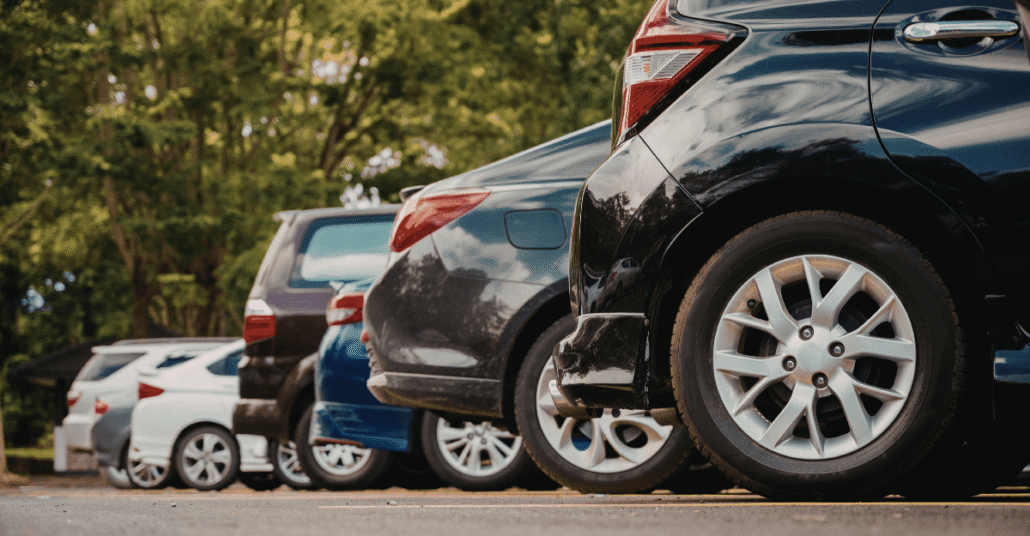
Navigating the parking lots along North Convent Street or trying to find a spot at the Meadowview Shopping Center can be surprisingly hazardous. While high-speed highway collisions often dominate the headlines, a significant number of vehicle accidents in Kankakee County occur at low speeds in parking lots. The most common scenario involves one driver backing out of a space and colliding with another vehicle passing down the aisle, or two drivers backing out simultaneously. These incidents often lead to heated disputes, with both parties insisting the other is to blame.
Determining liability in these situations is rarely as straightforward as assuming the backing driver is automatically guilty.
The General Rule of Right-of-Way in Parking Lots
In Illinois, the rules of the road extend to public parking areas. Generally, the driver in the “feeder lane” (the lane moving continuously through the rows of parked cars) has the right-of-way over a driver attempting to leave a parking space. Illinois statute generally dictates that a driver shall not back a vehicle unless such movement can be made with safety and without interfering with other traffic.
This places a significant burden of care on the driver reversing out of a spot. They must ensure the path is clear before moving and must yield to oncoming traffic. However, “right-of-way” is not a license for the driver in the feeder lane to drive recklessly. If the driver proceeding down the aisle is speeding, distracted by a phone, or ignoring traffic signage, they may share or absorb the liability for the collision.
Is the Driver Backing Out Always at Fault in a Parking Lot Crash?
No, the backing driver is not automatically at fault; liability depends on whether the other driver was speeding, distracted, or violating traffic laws at the moment of impact. Fault is determined by investigating which driver failed to exercise reasonable care under the specific circumstances of the collision.
While the reversing driver bears a high duty of care, there are several scenarios where the oncoming driver or a third party may be liable. For instance, if you are slowly inching out of a spot at the Northfield Square Mall with your reverse lights clearly visible, and another driver speeds down the lane while texting, failing to observe your vehicle, a jury or insurance adjuster may find the oncoming driver negligent.
The concept of “reasonable care” is central here. A driver traveling through the lane has a duty to keep a proper lookout. If evidence shows that the backing driver had already substantially exited the space and was visible for a significant period before the impact, the oncoming driver might be at fault for failing to stop or evade the collision.
Factors that can shift fault to the oncoming driver include:
- Excessive Speed: Driving significantly faster than is safe for a parking lot environment.
- Distracted Driving: Texting, adjusting the radio, or looking for a parking spot rather than watching the road.
- Disregarding Signage: Ignoring stop signs or yield markings painted on the pavement or posted at the end of rows.
- Wrong Way Driving: Traveling against the designated flow of traffic in a one-way lane.
- Headlight Violations: Driving without lights in a dark parking garage or at night.
The “50/50” Scenario: Two Drivers Backing Simultaneously
A common and complicated scenario in Kankakee parking lots involves two drivers backing out of spaces on opposite sides of the same aisle at the same time. In these “simultaneous backup” accidents, the vehicles often collide rear bumper to rear bumper.
Insurance companies frequently attempt to assign 50% fault to each driver in these cases, arguing that both had an equal duty to look back and yield. However, a detailed investigation can sometimes prove that one driver was more negligent than the other. For example, if one driver had started backing up significantly earlier and was nearly stopped when the second driver suddenly reversed into them, the second driver bears a larger portion of the blame.
How Does Illinois Comparative Negligence Affect Parking Lot Settlements?
Illinois uses a modified comparative negligence system, meaning you can recover damages only if you are less than 51% at fault for the accident. If you are found to be partially responsible, your compensation is reduced by your percentage of fault, but if you exceed 50% fault, you recover nothing.
This legal standard is particularly relevant in parking lot accidents where liability is often shared. Unlike some states where being even 1% at fault bars you from recovery, Illinois allows for a more equitable distribution of responsibility. However, the “51% bar” creates a strict cutoff. If an insurance investigation concludes you were 51% responsible for the collision, perhaps because you didn’t check your blind spot and the other driver was 49% responsible, you lose the ability to claim damages entirely.
This system makes the collection of evidence vital. If you can prove the other driver was speeding through the parking lot near the Kankakee Public Library, you might argue they were 60% at fault, while you were only 40% at fault for backing out. In this scenario, you would still receive compensation, though it would be reduced by your 40% share of the liability.
Key aspects of comparative negligence in parking claims:
- Evidence is Critical: Dash cam footage or surveillance video is often necessary to assign precise percentages of fault.
- Damage Reduction: A $10,000 claim would be reduced to $6,000 if the claimant is found 40% at fault.
- The 51% Cliff: A shift of just 1% in fault determination (from 50% to 51%) can be the difference between receiving a settlement and receiving nothing.
- Insurance Tactics: Adjusters often try to argue a claimant is 51% at fault to avoid paying the claim entirely.
Injuries in Low-Speed Backing Accidents
There is a common misconception that parking lot accidents are minor “fender benders” that do not cause physical harm. While vehicles may not be totaled, the human body is not designed to absorb unexpected impact forces, even at low speeds.
When a car is backing out and is struck from the side or rear, the occupants can experience significant rotational force. This can lead to serious soft tissue injuries.
- Whiplash and Neck Strain: The sudden jolt of an impact, even at low speed, can cause the head to rapidly snap forward and backward, damaging the ligaments, tendons, and muscles in the neck. This often results in whiplash, which can lead to chronic pain, stiffness, limited range of motion, and persistent headaches that may not fully manifest until days after the accident.
- Shoulder Injuries: When backing out, drivers often have their torso and shoulder twisted to look over the seat. This vulnerable, torqued position makes the shoulder highly susceptible to injury during an impact. The force can cause severe strain, dislocations, or even significant rotator cuff tears, which often require extensive physical therapy or surgical intervention.
- Concussions and Traumatic Brain Injuries (TBIs): Even if the driver’s head does not strike anything inside the vehicle, the violent “snap” or rapid acceleration-deceleration of the head can cause the brain to collide with the interior walls of the skull. This can result in a concussion or a more serious Traumatic Brain Injury, leading to symptoms like confusion, dizziness, memory issues, and long-term cognitive impairment.
- Wrist and Hand Fractures/Sprains: A common reaction during an unexpected impact is to tightly grip the steering wheel. The sudden force of the collision can travel directly up the arm, putting immense pressure on the wrists and hands. This can lead to painful fractures of the wrist bones, metacarpals, or severe sprains and ligament tears.
Victims of these accidents often seek treatment at local facilities such as the emergency department at Riverside Medical Center or immediate care centers in Bourbonnais. Medical documentation from these visits becomes a key piece of evidence in establishing that the “minor” accident caused major pain.
What Should I Do Immediately After a Parking Lot Accident in Kankakee?
Immediately stop your vehicle, check for injuries, and call the local police to request a report, even if the damage appears minor. Exchange information with the other driver, take photos of the vehicles and the surrounding scene, and identify any potential witnesses or security cameras nearby.
In private parking lots, police from the Kankakee Police Department or Bourbonnais Police Department may not always issue citations if the accident is on private property, but they will often facilitate an information exchange or create a report for record-keeping purposes. This report is vital because it prevents the other driver from changing their story later. Without an official record, a driver who apologized at the scene might later claim you backed into them when you were actually stationary.
Gathering your own evidence is equally important. Parking lots are often surveilled by security cameras, but this footage is frequently overwritten within days. Identifying the location of cameras on nearby businesses, such as grocery stores on Court Street or banks on Kennedy Drive, allows your attorney to send a preservation letter immediately.
Essential steps to protect your claim:
- Photograph the Positions: Take wide-angle shots showing exactly where the cars are in relation to the parking lines and any nearby fixed objects (like signs or light poles) before moving them. If the vehicles are creating an immediate traffic hazard, take as many photos as possible quickly before safely moving them to the side.
- Look for Skid Marks: Carefully check the pavement for any tire marks or skid marks. The absence of skid marks from the other vehicle might indicate they didn’t brake or react at all, strongly suggesting inattention or distraction on their part. If you find marks, photograph their length and position.
- Identify Witnesses: Ask anyone who saw the crash—pedestrians, other drivers, or people in nearby businesses—for their name, phone number, and email address. Independent accounts from objective third parties are powerful in “he-said, she-said” disputes and can provide crucial details about the speed and movements of both cars.
- Check for Cameras: Note if the accident happened in the field of view of a store’s security camera, an ATM camera, a traffic light camera, or a doorbell camera on a nearby house. Obtain the name of the business or the address of the house, as this video footage can be vital evidence.
- Seek Medical Care: Even if you feel only minor discomfort or shock, visit a doctor or urgent care center immediately. This is critical to link your injuries (including whiplash, bruising, or pain that might surface later) directly to the accident date and time, creating an official medical record.
Dealing with Insurance Companies After a Backing Accident
Insurance adjusters are trained to minimize payouts, and parking lot accidents are among their favorite claims to deny. They often default to a “word against word” determination, where they deny liability to both parties, leaving each driver to pay for their own repairs and medical bills.
They may record your statement and ask leading questions like, “You didn’t see the other car coming, did you?” Answering “no” can be twisted to mean you weren’t looking, rather than the truth: that the other car was moving so fast or was in a blind spot that it wasn’t visible despite your careful check.
Another common tactic is to argue that the impact was too low-speed to cause injury. They may cite the lack of visible damage to the vehicle’s bumper as proof that your neck or back pain is unrelated to the crash. However, modern bumpers are designed to rebound, hiding structural damage, and forces that don’t crumple steel can still injure the spine.
Contact Fotopoulos Law Office for Assistance
If you have been injured in a parking lot accident in Kankakee, Bradley, or Bourbonnais, do not assume you are out of options just because you were the one backing up. Liability is complex, and the details matter. You need an advocate who can analyze the evidence, challenge the insurance company’s assumptions, and fight for the compensation you need for your medical bills and vehicle repairs. At Fotopoulos Law Office, we know the local courts and the local roads. We are prepared to investigate your claim thoroughly and ensure your side of the story is heard.
Contact us today at 708-942-8400 or reach out via our online contact form to schedule a consultation. Let us handle the legal complexities so you can focus on your recovery.





Leave a Reply
Want to join the discussion?Feel free to contribute!