
A Car Turned Left in Front of My Motorcycle: Who Is at Fault?
The transition into warmer weather brings thousands of riders out onto the streets of Cook County. From scenic weekend rides up Sheridan Road to the daily, stop-and-go commute down Western Avenue, motorcyclists rely on other drivers to share the road responsibly. Unfortunately, the heavy volume of commuter traffic across Chicago creates a highly dangerous environment for two-wheeled vehicles. One of the most terrifying and devastating scenarios a rider can face is a passenger car suddenly turning left directly into their path of travel.
The moments following an intersection broadside collision are chaotic. As you wait for the Chicago Police Department to arrive and ambulance sirens to close in, the immediate physical pain is often matched by overwhelming financial anxiety. When a negligent motorist cuts off a motorcycle, the legal and medical aftermath becomes incredibly complex. Families are immediately thrown into a high-stakes battle with corporate insurance carriers who are determined to protect their profit margins at all costs.
Who Is Legally at Fault When a Vehicle Turns Left Into a Motorcycle?
Liability in left-turn collisions relies on the fundamental concept of right-of-way. When a motorcyclist is traveling straight through an intersection on a green light, or proceeding down a roadway with no stop signs or traffic control signals, they possess the established right-of-way. Any driver attempting to cross that path of travel assumes an absolute duty of care to ensure the maneuver can be completed safely without obstructing oncoming traffic.
In the Cook County Circuit Court, the presumption of fault typically rests heavily on the driver executing the left turn. Passenger vehicle operators must accurately judge the speed and distance of all approaching traffic before committing to their turn. When a driver misjudges a motorcycle’s speed, or simply fails to look closely enough at the oncoming lanes, their failure to yield constitutes a direct breach of their legal duty behind the wheel.
Establishing fault requires proving this breach through a preponderance of the evidence. This means our attorneys focus on gathering traffic camera footage from busy Chicago intersections, securing statements from eyewitnesses who saw the car dart out, and analyzing the physical property damage to both vehicles. The point of impact frequently tells the undeniable physical story of a driver cutting the corner too closely and causing a catastrophic impact.
Furthermore, the lack of skid marks from the motorcycle often proves that the car pulled out so suddenly that the rider had zero reaction time. When we reconstruct the crash data alongside private investigators, we consistently demonstrate that the turning driver failed to meet the basic standard of care expected of a licensed motorist operating a vehicle in Illinois.
Why Do Drivers Frequently Fail to See Approaching Motorcyclists?
After a devastating crash, the most common phrase uttered by the at-fault driver to the responding police officers is that they simply did not see the motorcycle. While this statement is often factually true, it does not absolve the driver of legal liability. Failing to see a hazard is a failure to maintain a proper lookout. The phenomenon known as inattentional blindness occurs when a motorist scans an intersection specifically looking for other large passenger cars or commercial trucks, causing their brain to completely filter out the narrower visual profile of a motorcycle.
Several compounding factors contribute to this dangerous lack of visibility on local roads.
- Smartphone Distraction: Motorists navigating unfamiliar neighborhood streets often glance down at GPS devices or text messages precisely as they enter the intersection, heavily reducing their reaction times and situational awareness.
- Visual Clutter: The dense urban environment of Chicago creates visual noise that overwhelms a driver’s ability to process approaching hazards. Flashing neon signs, crowded storefronts, and heavy pedestrian traffic all disguise oncoming riders.
- Vehicle Blind Spots: Modern passenger vehicles feature thick A-pillars designed to support the roof during rollovers. These structural pillars can easily obscure a motorcycle from the driver’s line of sight during a sweeping left-hand turn.
- Speed Misjudgment: Because motorcycles are physically smaller, the human eye struggles to accurately judge their speed and distance, leading drivers to falsely believe they have plenty of time to complete the turn safely.
- The Looming Effect: A motorcycle approaching directly head-on does not appear to grow in size as rapidly as a larger vehicle, tricking the turning driver’s brain into thinking the rider is much further away than they actually are.
When a driver chooses to operate a two-ton machine in a busy metropolitan area, they have an absolute legal obligation to actively search the roadway for all types of traffic. A quick, careless glance is insufficient. Drivers must consciously look twice to save a life, and failing to do so constitutes clear negligence.
What Hidden Medical Injuries Commonly Result from Broadside Motorcycle Impacts?
When a car pulls out in front of a motorcycle, the rider has almost no structural protection. The physical forces involved in an abrupt deceleration from fifty miles per hour to zero frequently throw the rider over the handlebars. This results in secondary impacts with the vehicle’s hood, windshield, or the unforgiving asphalt.
Seeking immediate medical attention at a specialized facility like Stroger Hospital or Northwestern Memorial Hospital is required because adrenaline masks severe internal injuries. A rider might stand up at the scene, dust off their jacket, and claim they feel fine, even while suffering from life-threatening internal bleeding. Delaying medical care gives the insurance company a massive opening to argue the injuries were not caused by the crash.
Comprehensive emergency imaging often reveals severe conditions that require immediate surgical intervention.
- Traumatic Brain Injuries: Even with a DOT-approved helmet, the sheer rotational force can cause concussions, cerebral contusions, or subdural hematomas that may not present neurological symptoms until days later.
- Lower Extremity Crushing: As the car bumper strikes the side of the motorcycle, the rider’s leg is frequently crushed between the two vehicles, resulting in shattered femurs, tibias, or complex pelvic fractures.
- Internal Organ Damage: Blunt force trauma to the abdomen can rupture the spleen, liver, or kidneys, causing slow internal bleeding that requires emergency trauma surgery to stop.
- Spinal Cord Trauma: The twisting motion of being thrown from the bike frequently causes herniated discs, fractured vertebrae, or nerve damage, leading to chronic back pain or partial paralysis.
- Severe Road Rash: Sliding across pavement strips away layers of skin and muscle tissue, embedding debris into the wound and creating a massive risk for systemic infection and permanent scarring.
Documenting these injuries on the same day as the accident creates an unbreakable chronological link between the driver’s negligence and your physical suffering, which is a required element of any successful injury claim.
What Immediate Steps Protect Your Legal Rights After a Cook County Collision?
The moments immediately following an intersection crash are critical for preserving evidence and protecting your long-term legal rights. What you say and do at the scene will directly impact the trajectory of your personal injury claim. Motorcyclists must take a proactive, defensive approach from the second the dust settles on the roadway.
If you are physically able to move without exacerbating your injuries, take the following steps to protect your claim.
- Call the Police: Never let the other driver talk you out of calling law enforcement. A formal traffic crash report generates an objective, third-party record of the exact location, time, and positioning of the vehicles.
- Document the Intersection: Use your smartphone to take wide-angle photographs of the intersection, the position of the car in the turning lane, traffic signals, skid marks, and all visible property damage to your motorcycle.
- Identify Eyewitnesses: Bystanders who saw the car cut you off are your most valuable asset. Collect names and phone numbers from pedestrians or other drivers before they leave the scene.
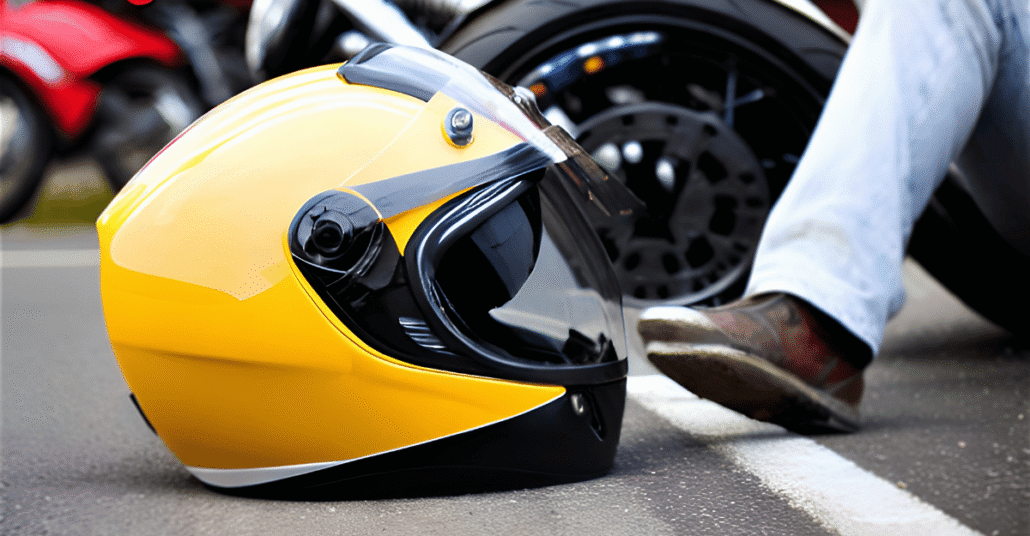
- Save Your Gear: Do not throw away your damaged helmet, torn jacket, or shattered phone. These items serve as physical evidence of the impact forces involved in the collision.
- Seek Immediate Care: Allow the paramedics to transport you to the nearest emergency room. Establishing a chronological medical record that connects your injuries directly to the impact is mandatory.
- Decline Insurance Interviews: When the at-fault driver’s carrier calls the next day asking how you feel, politely decline the conversation and direct all inquiries to your legal representation.
What Compensation Is Available for Injured Chicago Motorcyclists?
A severe left-turn collision disrupts every facet of a rider’s life. You are forced to miss work, surgical bills rapidly pile up, and your daily routine is completely shattered by painful physical therapy sessions. Illinois civil law provides a mechanism for victims to seek comprehensive damages that cover both their concrete financial losses and their deeply personal suffering.
Economic damages are designed to make the victim financially whole. This includes full coverage for ambulance transport, emergency room trauma care, surgical interventions, prescription medications, and any necessary home modifications. It also replaces the income you lose when you are forced to take a leave of absence to recover, as well as any diminished future earning capacity if you cannot return to your previous profession.
Non-economic damages acknowledge the human cost of the crash. These funds provide financial recovery for the intense physical pain and agonizing recovery process you are forced to endure. Compensation is also awarded for permanent surgical scars, road rash disfigurement, and the devastating realization that you may never be able to comfortably ride a motorcycle or participate in your favorite physical hobbies again.
Calculating these damages requires meticulous documentation and often involves working with financial planners to determine the lifetime cost of your medical care. We ensure no expense is overlooked before presenting a demand to the insurance carrier.
Contact Fotopoulos Law Office After a Chicago Motorcycle Accident
Dealing with the aftermath of a catastrophic motorcycle crash requires skilled, aggressive legal representation. At Fotopoulos Law Office, Attorney John S. Fotopoulos brings extensive trial experience and a relentless dedication to securing justice for injured riders across Cook County. We understand the specific tactics insurance companies use to unfairly blame motorcyclists, and we know exactly how to dismantle their defenses in the courtroom. We recognize the massive financial strain your family is under following a serious injury.
Our firm operates on a strict contingency fee basis, which means you do not pay any attorney’s fees unless we successfully win your case. We front all costs for crash reconstruction, private investigations, and court filings. Contact our office today to schedule your free, confidential consultation, and let our experienced legal team fight to protect your financial future.
Frequently Asked Questions
What if the driver who turned left claims I was speeding?
Insurance adjusters frequently use the speeding defense to deny liability. We counter these claims by pulling intersection camera footage, analyzing skid marks, and consulting with crash reconstruction professionals to prove you were traveling at a safe, lawful speed before the impact occurred.
How long do I have to file a motorcycle injury lawsuit in Illinois?
In Illinois, adult victims generally have two years from the exact date of the crash to file a personal injury lawsuit. Waiting jeopardizes critical evidence like surveillance footage and witness memories, making it necessary to initiate the legal investigation immediately.
Should I accept the initial settlement offer from the driver’s insurance?
You should never accept an initial settlement offer without consulting legal counsel. The first offer is almost always a lowball figure designed to close the case quickly before the full extent of your long-term medical treatment and future lost wages is completely known.
Will my case have to go to trial at the Cook County Circuit Court?
While many motorcycle claims are successfully resolved through aggressive out-of-court negotiations, some insurers refuse to offer fair compensation. If the insurance company will not provide an adequate settlement that covers your losses, we are fully prepared to present your case to a jury.
Does not wearing a helmet ruin my injury claim in Illinois?
Illinois is one of the few states that does not mandate motorcycle helmets for adult riders. Because you were not violating state law by riding without a helmet, the insurance company cannot automatically use your lack of a helmet to deny your claim or prove comparative negligence.












Leave a Reply
Want to join the discussion?Feel free to contribute!