
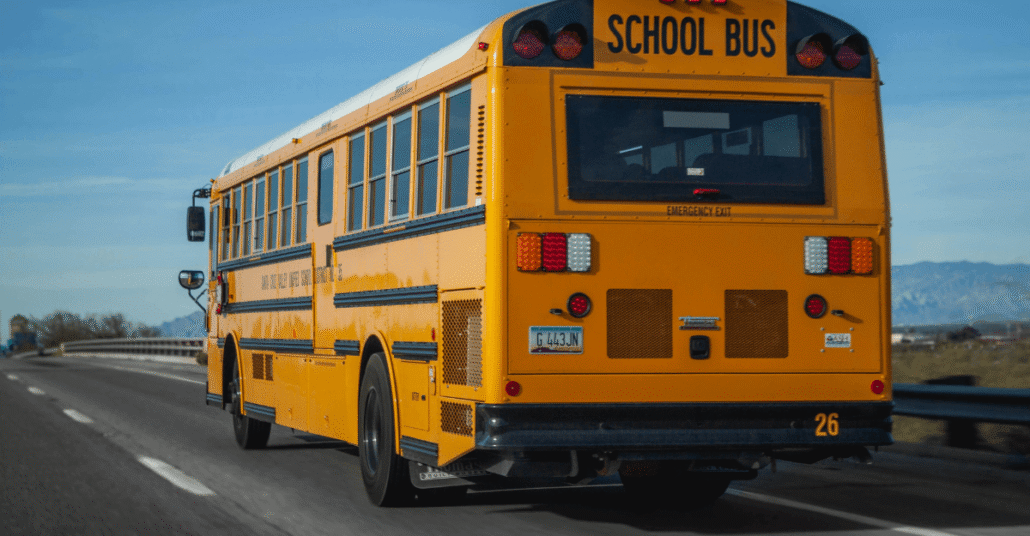
Hit by a School Bus in Orland Park: Can I Sue the School District?
The morning commute along LaGrange Road or 159th Street is often chaotic, filled with hurried drivers, commercial trucks, and fleets of yellow school buses transporting children to local campuses. We expect these massive, highly visible vehicles to be the safest on the road. When a school bus is involved in a collision with a passenger car, a pedestrian, or a cyclist, the physical and legal aftermath is overwhelming. Navigating the claims process against a government entity is not like a standard auto insurance claim; it involves rigid deadlines, complex immunity laws, and layers of bureaucratic red tape.
Who is Liable When a School Bus Causes an Accident in Illinois?
Liability for a school bus accident in Illinois may fall on the school district, a private transportation contractor, the bus driver, or a vehicle manufacturer. Determining exactly who is at fault requires a detailed investigation into the employment relationship and the underlying cause of the crash.
When a crash occurs in our area, the first assumption is often that the Orland School District 135 or Consolidated High School District 230 is entirely responsible. However, many school districts outsource their transportation needs to private, third-party bus companies. This distinction dramatically alters the trajectory of your legal claim. If the driver is a direct employee of the school district, the claim proceeds against the public entity. If the driver works for a private company, that corporation’s commercial liability insurance comes into play.
Furthermore, liability can be shared among multiple parties. A driver might be responsible for making an illegal left turn onto Wolf Road, but the bus company could share liability for negligent hiring if it failed to check the driver’s history of moving violations. Additionally, if the crash was caused by a mechanical failure, such as worn brakes or a blown tire, the maintenance facility or the part manufacturer might hold liability.
Potentially liable parties in a school bus collision include:
- The public school district is operating the vehicle.
- Private transportation contractors and fleet management companies.
- The individual bus driver (for gross negligence or intentional acts).
- Third-party maintenance providers are responsible for vehicle upkeep.
- Automotive manufacturers, if a defective part contributed to the collision.
- Other negligent motorists whose erratic driving forced the bus to swerve or brake suddenly.
Does the Illinois Tort Immunity Act Protect the School District?
Yes, the Illinois Local Governmental and Governmental Employees Tort Immunity Act provides significant protection to public school districts. To successfully sue a school district, plaintiffs generally must prove “willful and wanton conduct” rather than simple negligence, making these claims legally demanding and highly complex to litigate.
The concept of “willful and wanton conduct” is a high bar in Illinois civil law. In a standard car accident between two private citizens on 143rd Street, you only need to prove that the other driver was negligent, meaning they failed to exercise reasonable care, perhaps by following too closely or momentarily taking their eyes off the road. When suing a local government entity, simple carelessness is often not enough to break through their statutory immunity.
Willful and wanton conduct requires showing an actual or deliberate intention to cause harm, or an utter indifference to or conscious disregard for the safety of others. This is a critical distinction that insurance adjusters for municipal risk pools will aggressively use to deny your claim. They will argue that the bus driver simply made a routine error in judgment, which is protected under the law.
To overcome this defense, your legal representation must uncover evidence of severe recklessness. This requires a deep investigation into the circumstances of the crash and the history of the driver.
Examples that may constitute willful and wanton conduct include:
- Operating the school bus under the influence of alcohol or drugs.
- Texting while driving is an extreme, prolonged form of distracted driving.
- Intentionally running a red light or ignoring a stop sign at a high rate of speed.
- The school district is allowing a driver with a known history of severe traffic violations to continue operating a bus.
- A district knowingly keeps a bus in service with documented, critical mechanical failures, such as failing air brakes.
The Mechanics of a School Bus Collision on Orland Park Roads
The sheer size and weight discrepancy between a fully loaded school bus and a standard passenger vehicle dictates the severity of these crashes. A typical school bus weighs between 24,000 and 36,000 pounds, whereas an average sedan weighs roughly 4,000 pounds. When these two forces meet at an intersection like Harlem Avenue and 151st Street, the occupants of the smaller vehicle absorb the brunt of the kinetic energy.
Unlike commercial semi-trucks, which primarily travel on highways, school buses navigate dense residential neighborhoods, tight subdivisions, and busy retail corridors near places like Orland Square Mall. They make frequent stops, have massive blind spots, and must execute wide turns on narrow municipal streets. A driver misjudging the turning radius can easily crush a passenger car waiting at a stop line or strike a pedestrian in a crosswalk.
The injuries resulting from these disproportionate impacts are frequently catastrophic. Victims often suffer traumatic brain injuries (TBI), severe spinal cord damage, crush injuries, and complex fractures that require immediate intervention at trauma centers like Northwestern Medicine Palos Hospital. The medical expenses associated with these injuries can easily bankrupt a family, making the pursuit of fair compensation an absolute necessity for long-term survival and physical recovery.
What Should I Do Immediately After a School Bus Accident in Orland Park?
After a school bus accident in Orland Park, immediately call 911 to bring the Orland Park Police Department to the scene. Seek emergency medical evaluation at a local facility like Silver Cross Hospital, document the vehicles with photos, and collect witness contact information before leaving.
The minutes following a collision with a commercial or municipal vehicle are disorienting. Your body will likely be flooded with adrenaline, a chemical response that can mask the severe pain of soft tissue damage, internal bleeding, or spinal trauma. Never tell the responding police officer or the bus driver that you are “fine” or “uninjured.” State clearly that you need a medical evaluation.
The police report generated by the Orland Park Police is a foundational piece of evidence. Ensure the officer records the bus number, the driver’s commercial license information, and the specific school district or company operating the vehicle. While you wait for emergency responders, use your phone to capture the position of the vehicles, skid marks on the road, the weather conditions, and any visible injuries.
Critical steps to protect your health and your legal claim include:
- Refusing to provide a recorded statement to the school district’s insurance adjuster without legal counsel present.
- Following all medical advice and attending every follow-up appointment with your specialists or physical therapists.
- Keeping a detailed daily journal documenting your pain levels, physical limitations, and missed time from work.
- Preserving the clothing you were wearing and keeping all damaged personal property (like a crushed laptop or phone) in its post-accident condition.
- Directing all communication from the school district, the bus company, or their legal representatives to your attorney.
How Long Do I Have to File a Lawsuit Against an Illinois School District?
In Illinois, you generally have only one year from the date of the accident to file a lawsuit against a local government entity like a public school district. This is significantly shorter than the standard two-year statute of limitations for personal injury claims against private individuals.
This accelerated timeline is one of the most common traps for victims of school bus accidents. If you are negotiating with the district’s insurance provider and the one-year anniversary of the crash passes, the court will almost certainly dismiss your case, permanently barring you from recovering any compensation. The law is unforgiving regarding this deadline, which is outlined in the Tort Immunity Act.
If the bus is owned and operated by a private company rather than the school district, the standard two-year personal injury statute of limitations may apply. However, it is never wise to wait and see which deadline applies to your specific situation. The evidence needed to win these cases begins to disappear within days of the collision.
Important deadlines and evidence preservation factors to remember:
- Government entities require specific, formal notices of a claim long before a lawsuit is filed; missing a notice deadline can be fatal to your case.
- Surveillance footage from nearby Orland Park businesses or municipal traffic cameras is frequently overwritten within 48 to 72 hours.
- The bus’s internal dash cameras or Event Data Recorder (the “black box”) could be wiped or the vehicle repaired if a spoliation of evidence letter is not immediately sent to the defendants.
- Witness memories fade quickly; securing sworn statements shortly after the crash is vital for proving willful and wanton conduct.
Gathering Evidence for a Commercial Vehicle Claim
Building a compelling case against a school district or a commercial busing company requires a sophisticated approach to discovery. These entities possess vast resources and retain aggressive defense counsel whose sole job is to minimize your payout. To force a fair settlement or prepare for trial at the 5th Municipal District Courthouse in Bridgeview, your legal team must systematically dismantle their defenses.
We look far beyond the basic police report. School buses are heavily regulated commercial vehicles subject to state and federal safety standards. We aggressively subpoena the driver’s qualification file, which contains their driving record, background checks, and results of mandatory drug and alcohol screenings. If a driver failed a random drug test months prior but was allowed to keep their route, this provides powerful evidence of institutional negligence.
Additionally, we demand the production of the vehicle’s maintenance logs. School buses endure heavy wear and tear, and fleet mechanics are sometimes pressured to rush inspections to keep buses on the road. If a post-crash inspection reveals that the brake pads were worn far below legal limits, or that a steering column defect was ignored during the last preventive maintenance check, the liability shifts heavily onto the operating entity. We also secure the data from the vehicle’s Event Data Recorder, which provides unalterable metrics on the bus’s speed, braking force, and steering input in the seconds immediately preceding the impact.
Can I Recover Damages if My Child Was Injured While Riding the Bus?
Yes, if your child is injured while riding a school bus, you can pursue a claim for their medical expenses and suffering. School buses operate as common carriers, meaning drivers owe the highest degree of care to their passengers, though government immunity rules may still apply.
The dynamics of a school bus interior are unique. Unlike passenger cars, traditional large school buses are not required to have seatbelts for passengers. Instead, they rely on a concept called “compartmentalization,” using closely spaced, energy-absorbing high-backed seats to protect children during a crash. While this design is effective in frontal collisions, it offers very little protection during side-impact crashes or rollovers. Children can be thrown from their seats, striking the windows, the roof, or other passengers.
If your child suffered a concussion, dental injuries, or fractures while riding a bus to an Orland Park school, the emotional toll on your family is immense. Pursuing a claim on behalf of a minor involves specific legal mechanisms. In Illinois, any settlement involving a minor that exceeds a certain financial threshold must be approved by a judge in the Cook County circuit court system to ensure the funds are properly protected for the child’s future benefit. Your legal counsel will manage the establishment of restricted accounts or structured settlements to safeguard your child’s recovery.
Contact Fotopoulos Law Office for Dedicated Representation
Being involved in an accident with a school bus brings unique physical, emotional, and legal challenges. At Fotopoulos Law Office, we understand the specific tactics used by government entities and private insurance carriers to deny valid claims. We know how the local courts in Bridgeview operate and what evidence is required to build a compelling case for maximum compensation. If you or a loved one were injured in a school bus collision in Orland Park or the surrounding south suburbs, we are ready to listen to your story and protect your rights.
Contact us today or reach out through our online contact form to schedule a consultation.








Leave a Reply
Want to join the discussion?Feel free to contribute!