
Left-Turn Motorcycle Crashes in Kankakee: Proving the Turning Driver’s Fault
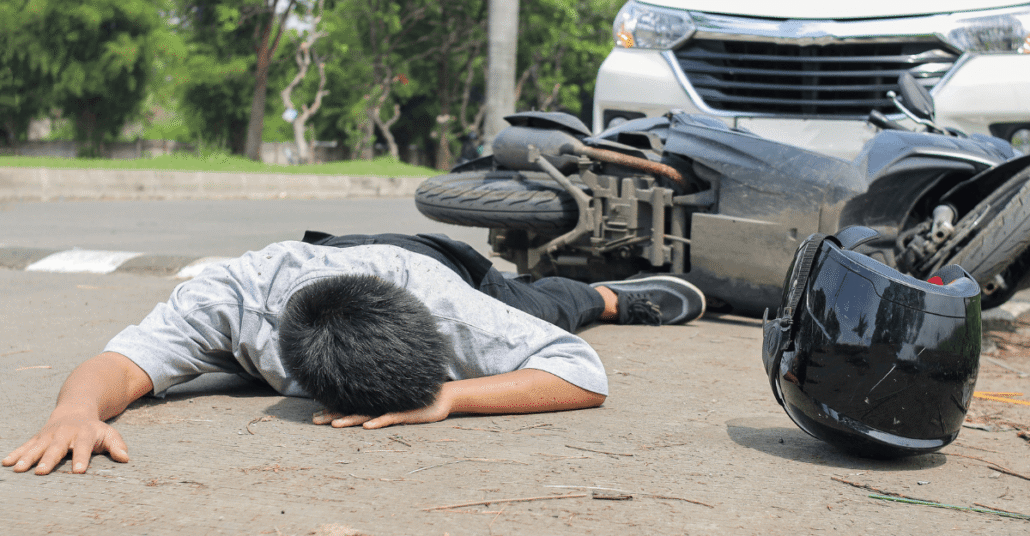
The stretch of Illinois Route 17 running through Kankakee carries a steady pulse of commercial trucks, commuting passenger vehicles, and local traffic. For a motorcyclist riding down Court Street or navigating the busy intersections near Interstate 57, a routine trip can instantly transform into a life-altering emergency when an oncoming driver cuts across traffic to make a left turn. The sound of screeching tires is almost always followed by a devastating impact. Striking the side of a two-ton passenger vehicle throws a rider onto the asphalt, leaving them with severe trauma while the turning motorist stammers that the motorcycle appeared out of nowhere.
Following a left-turn collision, injured riders usually face an uphill battle. While recovering in intensive care units at facilities like Riverside Medical Center or Ascension Saint Mary – Kankakee, corporate insurance adjusters immediately begin building a defense. They attempt to capitalize on lingering biases against motorcyclists, claiming the rider was speeding, driving aggressively, or failing to avoid the crash.
Why Are Left-Turn Intersections So Dangerous for Motorcyclists in Kankakee?
Intersections represent the single most dangerous physical environment for motorcyclists in Kankakee County. A significant majority of multi-vehicle motorcycle accidents occur when a passenger car or commercial truck executes a left-hand turn directly into the path of an oncoming motorcycle that has the lawful right-of-way. Understanding why these wrecks happen so consistently requires examining both human visual processing and local roadway design.
Cognitive research conducted by traffic safety institutes highlights a visual phenomenon known as inattentional blindness or the size-arrival illusion. When drivers prepare to turn left at busy intersections like Court Street and Wall Street, their visual focus is trained to scan for large, high-profile hazards, specifically other passenger cars, SUVs, and commercial vehicles. Because a motorcycle presents a much narrower visual profile, the driver’s brain frequently fails to process the rider’s presence, even when the motorcycle is clearly visible in their direct line of sight.
In addition to cognitive processing errors, specific physical and infrastructure factors along Kankakee roadways amplify left-turn collision risks:
- Commercial Arterials: High-speed corridors with dual left-turn lanes created to manage heavy traffic flow often obscure sightlines for turning drivers.
- Interstate Access Points: Rapidly fluctuating traffic speeds near off-ramps lead left-turning drivers to make hasty, unsafe visual assessments.
- Visual Noise: Visual clutter from retail signage, dense street lighting, and roadside development along N. Convent St and S. Washington Ave creates overwhelming visual noise.
- Sightline Obstructions: Temporary obstructions like large delivery trucks, overgrown vegetation, or utility work frequently mask oncoming two-wheeled traffic.
What Does Illinois Law Say About Left-Turn Right-of-Way Rules?
When evaluating legal liability in a left-turn traffic wreck, Illinois statutory law provides a clear and uncompromising standard. Under 625 ILCS 5/11-902, the Illinois Vehicle Code strictly establishes right-of-way obligations for left-turning motorists:
The driver of a vehicle intending to turn to the left within an intersection or into an alley, private road, or driveway shall yield the right-of-way to any vehicle approaching from the opposite direction which is within the intersection or so close thereto as to constitute an immediate hazard.
This statutory requirement places the primary legal burden squarely on the left-turning driver. The law establishes that an oncoming vehicle, including a motorcycle, has the absolute legal right to maintain its path of travel through an intersection. A turning driver cannot lawfully execute their turn based on guesswork or hopeful assumptions regarding an oncoming rider’s speed.
Furthermore, 625 ILCS 5/11-801 reinforces this rule by establishing mandatory lane positioning and continuous turn signal requirements. If a driver fails to signal properly, cuts across lanes abruptly, or turns across traffic when an oncoming motorcycle is close enough to constitute an immediate hazard, that driver has committed a statutory traffic violation. In a civil personal injury lawsuit, demonstrating that the driver violated state traffic statutes serves as prima facie evidence of negligence, establishing that the driver breached their fundamental duty of reasonable care.
How Do Insurance Companies Try to Blame Motorcyclists for Left-Turn Collisions?
Insurance adjusters routinely claim motorcyclists were speeding, lane-splitting, or failing to take evasive action prior to a left-turn crash. By attempting to assign partial or majority fault to the rider, insurers seek to reduce financial payouts under Illinois’ modified comparative negligence statute.
Despite clear statutory right-of-way laws favoring oncoming traffic, insurance companies rarely accept full financial responsibility without an aggressive fight. Claims adjusters and defense lawyers rely on well-worn strategies designed to shift the blame onto the injured rider. Because juries and the general public sometimes hold subconscious biases against motorcyclists, insurance companies exploit these stereotypes to minimize financial payouts.
Common defense arguments raised by insurance carriers following a left-turn collision include:
- Allegations of Excessive Speed: The insurer will claim the rider was traveling significantly over the posted speed limit, arguing that the turning driver could not reasonably anticipate how quickly the motorcycle would arrive at the intersection.
- Failure to Take Evasive Action: Adjusters often allege the rider was distracted, inexperienced, or failed to apply maximum braking force to avoid the broadside collision.
- Visibility Defenses: Defense teams argue the motorcyclist was wearing dark clothing, lacked proper headlight illumination, or was positioned in a way that made them impossible to see.
- Improper Lane Usage: Insurance representatives frequently assert that the rider was weaving between lanes or executing an unlawful maneuver immediately before the impact.
Overcoming these unfair assertions requires gathering objective physical evidence early. An experienced legal team counteracts insurance rhetoric by presenting hard facts, scientific accident reconstructions, and precise mathematical calculations that establish the turning driver’s complete failure to yield.
What Critical Evidence Is Needed to Prove the Turning Driver Was at Fault?
Securing full compensation after a left-turn motorcycle crash depends entirely on the strength of the evidence gathered in the hours and days following the incident. While the turning driver may claim to police officers that the motorcycle came out of nowhere, physical evidence provides an accurate, unyielding record of what actually occurred.
To build an unassailable liability case against a negligent left-turning driver, our legal team focuses on gathering and preserving critical evidence categories:
- Police Crash Reports and Citations: Official documentation recorded by the Kankakee Police Department, Kankakee County Sheriff’s Office, or Illinois State Police detailing traffic citations issued to the turning driver for failure to yield.
- Surveillance and Dashcam Footage: Video recordings captured by intersection cameras, municipal traffic monitoring systems, commercial storefront security systems along Route 17 or Kennedy Drive, and vehicle dashcams.
- Vehicle Black Box (EDR) Data: Modern passenger vehicles store vital digital information within their Event Data Recorders (EDR). Extracting EDR data reveals the driver’s exact speed, steering angle, throttle position, and brake application timing in the seconds leading up to impact.
- Neutral Eyewitness Testimony: Independent accounts from surrounding motorists, pedestrians, or shop owners who observed the turning driver cut across traffic lanes without stopping or checking for oncoming vehicles.
- Accident Reconstruction Data: Comprehensive physical measurements of tire marks, gouge marks in the pavement, debris field dispersion, and structural crush patterns on both vehicles to mathematically calculate impact speeds and crash angles.
How Does Illinois Modified Comparative Negligence Affect Your Motorcycle Claim?
Understanding how fault is legally calculated is essential when seeking financial recovery in Illinois civil courts. Under 735 ILCS 5/2-1116, the Illinois Code of Civil Procedure governs personal injury claims using a legal standard known as modified comparative negligence.
Under this statute, an injured motorcyclist is entitled to recover financial compensation from a negligent driver as long as the rider’s percentage of responsibility for the crash is 50% or less. However, if a jury or insurance adjuster determines that the rider bears a partial degree of fault, the overall financial award is reduced in direct proportion to that percentage.
Consider a concrete financial example of how 735 ILCS 5/2-1116 operates in practice:
- An injured motorcyclist suffers $500,000 in total economic and non-economic damages following a left-turn collision on Route 50.
- The jury determines the left-turning driver was primarily at fault for failing to yield, but assigns 10% of the fault to the rider for slight over-speeding.
- The rider’s total financial recovery is reduced by 10% ($50,000).
- The final recovery awarded to the rider is $450,000.
Crucially, if the insurance company successfully convinces a court that the rider was 51% or more at fault, the injured party is legally barred from recovering a single dollar. This strict 51% bar illustrates why defense adjusters work so aggressively to assign blame to riders. Defeating these comparative fault claims is an absolute priority for our firm.
What Steps Should You Take Immediately After a Left-Turn Motorcycle Crash in Kankakee?
The actions an injured rider takes immediately following an intersection wreck can profoundly influence both their medical recovery and the ultimate success of their legal claim. If you are physically able to do so at the scene, taking methodical steps protects your rights:
- Obtain Emergency Medical Care and Dispatch Police: Call 911 immediately. Ensure emergency responders and law enforcement officers from the Kankakee Police Department or state police arrive at the scene to document the wreck and clear the roadway.
- Document the Physical Collision Scene: If physical injuries permit, capture high-resolution photographs and videos of the crash scene. Focus on vehicle positions before they are towed, the exact point of impact on the car, skid marks, traffic signals, weather conditions, and visible bodily injuries.
- Gather Driver and Witness Information: Obtain full names, phone numbers, email addresses, and driver’s license details from all involved drivers. Collect contact information from any bystanders or motorists who witnessed the left-turn crash.
- Seek Immediate Hospital Evaluation: Accept ambulance transportation to a regional emergency department, such as Riverside Medical Center (350 N. Wall St.) or Ascension Saint Mary – Kankakee (500 W. Court St.). Comprehensive medical evaluation is essential, as internal trauma and brain injuries are not always immediately apparent.
- Refuse Recorded Statements to Defense Insurance Adjusters: Insurance adjusters representing the turning driver will often call within hours of the crash, offering friendly conversation while seeking recorded statements. Politely decline to speak with them or give any recorded statement until you have consulted legal counsel.
- Consult a Qualified Kankakee Injury Attorney: Contact a skilled personal injury firm that specializes in motorcycle accident litigation to preserve physical evidence, interface with insurance carriers, and initiate a formal investigation.
What Compensation Can You Recover After a Left-Turn Motorcycle Accident?
Victims of left-turn motorcycle crashes in Illinois can recover both economic and non-economic damages. Recoverable losses include emergency medical expenses, future rehabilitative costs, lost wages, reduced earning capacity, pain and suffering, emotional distress, and property damage for ruined equipment.
Because motorcyclists lack the protective steel cage, seatbelts, and airbags of passenger vehicles, left-turn impacts frequently inflict catastrophic injuries. Victims often face months or years of intensive medical care, prolonged work absences, and life-altering physical impairments. Under Illinois civil law, injured plaintiffs are entitled to seek full economic and non-economic damages designed to restore their financial stability.
Compensable financial and personal losses in a motorcycle injury lawsuit include:
- Past and Future Medical Expenses: Reimbursement for trauma care, emergency room bills, surgical procedures, intensive care stays, prescription medications, specialized physical therapy, and required future medical equipment.
- Lost Income and Lost Earning Capacity: Total compensation for income lost during your initial hospital stay and recovery period, along with long-term compensation if permanent disability reduces your future earning capacity.
- Pain, Suffering, and Emotional Distress: Financial recovery for physical pain, permanent scarring, disfigurement, loss of normal life enjoyment, emotional trauma, and post-traumatic stress resulting from the collision.
- Property Damage and Helmet Coverage: Full compensation to repair or replace your damaged motorcycle, customized aftermarket components, protective riding gear, helmet, and personal belongings destroyed in the impact.
Contact Fotopoulos Law Office After a Kankakee Motorcycle Crash
A severe motorcycle accident disrupts every aspect of your life, your health, your family’s stability, and your financial security. At Fotopoulos Law Office, Attorney John S. Fotopoulos brings extensive trial experience and dedicated advocacy to every client we represent across Kankakee County and the 21st Judicial Circuit. Our firm handles all personal injury and motorcycle collision claims on a contingency fee basis. You will pay no upfront legal fees, retainers, or out-of-pocket expenses. We only receive attorney fees if we successfully secure a financial settlement or court verdict on your behalf.
Contact our office today or visit our contact page to schedule your free, confidential case evaluation.
Frequently Asked Questions
Can I still recover compensation if I was not wearing a helmet during the crash?
Yes. Illinois law does not mandate helmet usage for adult motorcycle operators. The defense cannot use your decision not to wear a helmet to prove you were at fault for causing the left-turn collision, although they may attempt to argue helmet usage would have mitigated specific head injuries.
Who is at fault if the driver claims they could not see my motorcycle?
In almost all cases, the turning driver remains legally at fault under 625 ILCS 5/11-902. Failing to notice an oncoming motorcycle is an admission of failing to keep a proper lookout, which constitutes driver negligence rather than a valid legal defense.
How long does it take to settle a left-turn motorcycle accident claim in Kankakee County?
The timeline depends on the severity of your injuries and insurance carrier cooperation. While straightforward claims with clear liability may resolve within several months, complex cases involving catastrophic injuries or disputed fault may take a year or longer as your legal team prepares for trial in the 21st Judicial Circuit.
What if the left-turning driver claims I was speeding?
Insurers frequently allege speeding to shift fault onto the rider under Illinois’ comparative negligence rules. Your attorney can counter these claims using physical evidence, such as skid mark analysis, event data recorder information, and accident reconstruction testimony.
How much does it cost to hire a Kankakee motorcycle accident attorney?
Fotopoulos Law Office handles personal injury and motorcycle collision claims on a contingency fee basis. You pay no upfront retainers or out-of-pocket legal fees, and attorney fees are only paid if compensation is successfully recovered on your behalf.
What if the left-turning driver who hit me fled the scene?
If the turning driver commits a hit-and-run, you can still pursue financial recovery through the Uninsured Motorist (UM) coverage on your own motor vehicle or motorcycle insurance policy. An attorney can help process this claim to ensure your insurer pays fair compensation.








Leave a Reply
Want to join the discussion?Feel free to contribute!