Naperville Car Accident Attorney
Experienced Legal Support and Representation for Victims of Motor Vehicle Collisions in Naperville and Their Families
Have you ever considered the frequency of motor vehicle collisions on our local roadways? In a bustling city like Naperville, traffic accidents are a daily occurrence, yet only the most catastrophic events tend to receive coverage in the local news. However, a collision does not need to be a headline-making event to fundamentally alter the course of your life. On an average day throughout Illinois, statistics indicate that more than $150$ individuals sustain injuries in traffic accidents—calculated at approximately one injury every nine minutes. This results in over $60,000$ injured victims annually, each of whom must navigate the physical, emotional, and financial aftermath of their ordeal.
If you have recently sustained injuries in a Naperville car crash, you may be eligible to seek financial compensation to assist in your recovery and provide for your future needs. At Fotopoulos Law Office, we provide the diligent guidance and assertive representation necessary throughout the legal process. Our firm has a long history of representing collision victims throughout the Naperville area, and we possess a deep understanding of the local court systems and the steps required to hold negligent parties accountable for the harm they have caused.
Dedicated Representation for Personal Injury Claims in Naperville
Attorney John S. Fotopoulos works closely with individuals who have been harmed in various types of motor vehicle accidents. He and his team recognize that a life-altering event can happen in a split second, particularly when another party acts with negligence.
The Crossroads of Liability: Why Naperville’s Arteries Are High-Risk Zones
The roads of Naperville are a paradox of suburban planning: while the city is consistently ranked as one of the safest in America, its asphalt tells a different story. The danger primarily stems from a collision of high-density commercial growth and a geographic layout that forces massive traffic volumes through specific “choke points.” For a personal injury lawyer, Naperville represents a complex landscape where Illinois’ modified comparative negligence laws often come into play.
Geographically, Naperville is dominated by the Route 59 corridor. This north-south artery acts as a commercial spine for the region, but its proximity to the Fox Valley Mall and high-velocity merging lanes makes it a hotspot for high-impact T-bone collisions. Specifically, the intersection of Route 59 and North Aurora Road is notorious, recording over 100 crashes annually. The sheer density of retail entrances—where drivers are constantly decelerating to turn into shopping centers while commuters are maintaining 40-50 mph—creates a perpetual “friction” that leads to frequent rear-end accidents.
Further east, the convergence of 75th Street and Washington Street presents a unique geographic hazard. Washington Street serves as the primary gateway to the historic Downtown Naperville and landmarks like Edward Hospital. The transition from the high-speed suburban stretches of 75th Street into the tighter, pedestrian-heavy grids of the downtown area near the Riverwalk creates a dangerous “speed mismatch.” In the context of Illinois law, these areas are frequent sites for “failure to reduce speed” citations, which serve as critical evidence in personal injury claims.
Moreover, the city’s expansion south toward 111th Street has outpaced traditional infrastructure, leading to complex multi-lane configurations that confuse non-local drivers. When accidents occur here, the legal stakes are high; because Illinois allows victims to recover damages only if they are less than 50% at fault, the precise geographic details—such as obstructed views from commercial signage or malfunctioning turn arrows near the DuPage Children’s Museum—can be the difference between a successful settlement and a total loss.
Key Takeaways for Naperville Residents
- High-Risk Zones: Route 59, 75th Street, and the Washington Street corridor near Downtown.
- Legal Framework: Illinois follows a “modified comparative negligence” rule (51% bar).
- Common Citations: Failure to reduce speed to avoid a crash is the city’s leading accident factor.
- Local Strategy: Successful injury claims in Naperville often hinge on analyzing intersection-specific traffic camera data and commercial “turn-in” patterns.
What Are Contributing Factors to Naperville Car Crashes?
Collisions on major Naperville thoroughfares like Route 59 often stem from speeding, aggressive driving, and impaired operation. Distractions—primarily mobile devices—and driver fatigue further escalate risks. Additionally, mechanical failures and poor maintenance contribute to frequent accidents. While victims can seek legal justice for injuries caused by such negligence, the recovery process is often complex. Our team simplifies this journey, managing claims so you can focus entirely on physical rehabilitation.
Primary Factors in Naperville Traffic Collisions
| Risk Category | Specific Contributing Behaviors | Impact on Driving Ability |
| Speed & Aggression | Speeding, tailgating, road rage, and improper lane changes. | Reduces reaction time and makes it harder to maintain vehicle control in emergencies. |
| Impairment | Driving under the influence of alcohol, medicinal, or recreational drugs. | Compromises judgment, coordination, and the ability to process visual information. |
| Mobile Distraction | Texting, emailing, or engaging in phone conversations while driving. | Causes significant cognitive distraction; a vehicle can travel 100 yards in seconds without driver oversight. |
| General Distraction | Eating, adjusting GPS, interacting with passengers, or “rubbernecking.” | Diverts visual, manual, or cognitive attention away from Naperville traffic conditions. |
| Fatigue & Inexperience | Driving while exhausted or lacking practical experience in complex traffic. | Leads to delayed reactions and poor decision-making similar to intoxicated driving. |
| Mechanical Failures | Faulty brakes, tire blowouts, or steering malfunctions. | Causes sudden loss of control regardless of driver intent; often tied to manufacturing defects. |
| Negligent Maintenance | Skipping brake inspections, tire rotations, or fluid checks. | Increases the foreseeable risk of breakdown and high-impact collisions due to wear and tear. |
What Types of Traffic Collisions Happen the Most in Naperville, IL?
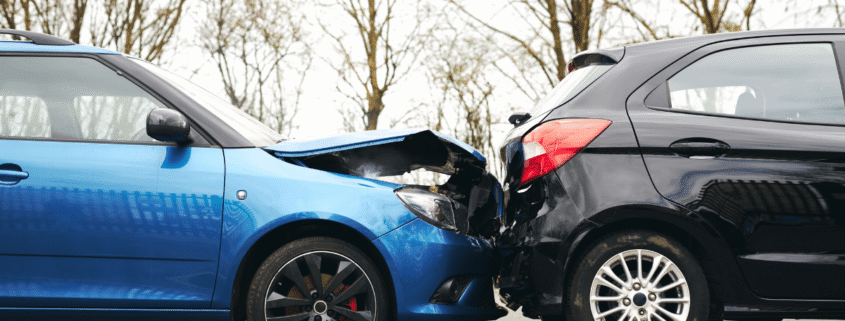
Naperville faces various traffic mishaps, ranging from common rear-end impacts and sideswipes to life-threatening head-on and T-bone collisions. Dangerous rollovers and complex multi-vehicle pileups frequently occur during icy winters, while intersection errors and hit-and-run incidents further complicate the legal landscape. Whether dealing with soft-tissue injuries or catastrophic trauma, understanding these specific accident types is essential for determining liability and navigating the recovery process within the local community.
Naperville Collision Summary Table
| Type of Crash | Primary Characteristics | Common Factors | Typical Resulting Injuries |
| Rear-end | Impact from behind | Distraction, tailgating | Whiplash, spinal strain |
| Sideswipe | Lateral contact | Unsafe lane changes | Loss of control, side damage |
| T-bone | Perpendicular impact | Running red lights | Internal trauma, fractures |
| Head-on | Front-to-front impact | Wrong-way driving | Catastrophic or fatal injuries |
| Rollover | Vehicle flips | Speed, sharp turns | Head trauma, ejections |
| Multi-vehicle | Chain reaction | Weather, highway speeds | Complex property/injury claims |
| Intersection | Crossing traffic hit | Failure to yield | Varied impact trauma |
| Hit-and-Run | Driver departs scene | Fear of liability | Insurance coverage disputes |
What Illinois Laws Apply to Car Accident Claims in Naperville, IL?
Navigating the aftermath of a car accident in Naperville, Illinois, involves more than just dealing with insurance adjusters. Whether your collision occurred on Route 59, the Ronald Reagan Memorial Tollway, or a local street in Downtown Naperville, your claim is governed by specific Illinois state statutes. Understanding these laws is critical for protecting your right to compensation for medical bills, lost wages, and vehicle repairs.
1. The Statute of Limitations
The most important law to keep in mind is the Statute of Limitations, which sets a strict deadline for filing a lawsuit. In Illinois, under 735 ILCS 5/13-202, you generally have two years from the date of the accident to file a personal injury lawsuit.
If you are only seeking compensation for vehicle repairs or other property damage, the deadline is extended to five years under 735 ILCS 5/13-205. Failing to file within these windows usually results in the court dismissing your case permanently. Note that exceptions exist for minors (who typically have until their 20th birthday) and individuals with legal disabilities.
2. Modified Comparative Negligence (The 51% Bar Rule)
Illinois follows a modified comparative negligence system (735 ILCS 5/2-1116). This law determines how much compensation you can recover if you were partially at fault for the crash.
- The 51% Bar: You can only recover damages if you are found to be less than 51% responsible for the accident. If a jury or insurance adjuster determines you were 51% or more at fault, you are barred from recovering any compensation from other parties.
- Proportional Reduction: If you are less than 51% at fault, your total compensation is reduced by your percentage of blame. For example, if your total damages are $100,000 but you are found to be 20% at fault, you would receive $80,000.
3. Illinois “At-Fault” Insurance System
Unlike “no-fault” states, Illinois operates under a tort (fault-based) system. This means the person responsible for the accident is liable for the damages. In Naperville, an injured party has three main options for recovery:
- Filing a claim with their own insurance company (if they have applicable coverage).
- Filing a third-party claim against the at-fault driver’s insurance policy.
- Filing a personal injury lawsuit in civil court (typically in DuPage or Will County, depending on the exact location of the crash).
- Mandatory Insurance Minimums
Illinois law requires all drivers to carry minimum liability insurance. As of 2024/2025, these limits include:
- $25,000 for bodily injury or death of one person.
- $50,000 for total bodily injury or death per accident.
- $20,000 for property damage.
Drivers must also carry Uninsured Motorist (UM) coverage at the same 25/50 minimums to protect them if they are hit by a driver who lacks insurance.
- Reporting Requirements
Under the Illinois Vehicle Code, you must stop at the scene of any accident involving injury, death, or damage to an attended vehicle. You are legally required to exchange information and provide “reasonable assistance” to the injured.
Furthermore, you must report the accident to the Illinois Department of Transportation (IDOT) if the crash resulted in injury, death, or property damage exceeding $1,500 (or $500 if any driver is uninsured). In Naperville, calling 911 usually ensures a Naperville Police Department officer creates a formal crash report, which serves as vital evidence for your claim.
What Compensation Can You Recover from a Naperville Car Accident?
Fotopoulos Law Office provides compassionate, personalized advocacy for accident victims, prioritizing your family’s unique needs and long-term goals. Their dedicated attorneys pursue comprehensive compensation for medical costs, lost wages, disability, and emotional suffering, as well as property restoration and disfigurement. In tragic cases of fatal collisions, the firm fiercely represents surviving family members in wrongful death litigation to ensure justice and financial security during difficult times.Our firm advocates for the recovery of various damages, including:
- Current and future medical expenses
- Loss of income and future earning capacity
- Permanent or temporary disability benefits
- Compensation for physical pain and emotional suffering
- Restoration for disfigurement or scarring
- Property damage repair or replacement
In the tragic event of a fatal collision, we represent surviving family members in seeking justice through wrongful death litigation.
Contact Our Naperville Car Accident Lawyer for a Free Consultation
If you or a loved one has sustained injuries in a motor vehicle collision, reach out to our firm for guidance. We offer a no-cost consultation and case evaluation to help you understand your legal options and the best path forward.
Schedule your free consultation by calling 708-942-8400 today. Our firm is dedicated to serving the Naperville community and ensuring that victims of negligence receive the professional support they deserve.
Frequently Asked Questions: Naperville Car Accidents
1. What is the deadline to file a car accident claim in Naperville?
In Illinois, the statute of limitations for filing a personal injury lawsuit after a motor vehicle collision is generally two years from the date of the accident. This strict legal deadline, established under $735$ ILCS $5/13$-$202$, means that if you fail to initiate legal action within this window, you will likely lose your right to seek compensation forever. Property damage claims typically allow for a longer filing period of five years.
2. Can I still recover compensation if I was partially at fault for the crash?
Yes, you can still recover damages even if you were partially responsible, provided your share of the blame does not exceed $50\%$. Illinois follows a “modified comparative negligence” system. Under this rule, your final compensation award is reduced by your specific percentage of fault. For example, if a jury determines you were $20\%$ responsible for the collision, you would receive $80\%$ of the total damages awarded in your case.
3. What is the “51% bar rule” in Illinois car accident cases?
The $51 bar rule is the cornerstone of Illinois’ modified comparative negligence law. It states that an injured party is strictly prohibited from recovering any financial compensation if they are found to be $51% or more at fault for the accident. Essentially, if you are more than half responsible for the incident, you cannot collect damages from other parties. Proving you fall below this threshold is critical for a successful claim.
4. What are the highest-risk traffic zones for collisions in Naperville?
Naperville’s high-density commercial corridors are notorious for frequent accidents. The Route $59$ corridor, particularly the intersection at North Aurora Road, records over $100$ crashes annually due to high-velocity merging and retail “friction.” Other hazardous areas include the convergence of $75$th Street and Washington Street near Edward Hospital. These zones often experience “speed mismatches” where high-speed suburban traffic transitions into congested, pedestrian-heavy downtown grids, leading to frequent high-impact rear-end and T-bone collisions.
5. What immediate steps should I take after a Naperville car accident?
Immediately following a collision, prioritize safety by moving to a secure area and calling $911$. The Naperville Police Department must generate an official report to document the scene. If physically able, take photographs of vehicle damage, road conditions, and traffic signals. Exchange insurance information with all involved drivers and gather contact details from witnesses. Finally, seek a professional medical evaluation at Edward Hospital to document any injuries for your legal claim.
6. Should I accept an early settlement offer from an insurance company?
You should never accept an early settlement offer without consulting an experienced Naperville car accident attorney. Insurance adjusters often propose quick payouts shortly after an accident, before the full extent of your medical needs or long-term complications is known. Once you sign a release, you waive your right to pursue further compensation. A legal review ensures that any settlement fully accounts for future medical expenses, lost wages, and emotional suffering.
7. What types of compensation can I recover after a car crash?
Victims of motor vehicle accidents in Naperville can pursue “compensatory damages,” which include both economic and non-economic losses. Economic damages cover tangible costs like current and future medical bills, lost income, and vehicle repair expenses. Non-economic damages compensate for intangible impacts such as physical pain, emotional distress, disability, and disfigurement. In tragic cases involving a fatality, surviving family members may also pursue a wrongful death claim to secure their financial future and justice.
8. How do I obtain a copy of my Naperville police crash report?
If the Naperville Police Department responded to your accident, you can typically obtain a copy of the crash report through their Department of Records. You may need to provide the date of the accident, the report number, and pay a small processing fee. If the collision occurred on a major highway like I-$88$, the Illinois State Police (ISP) may have handled the report, requiring a request through their specific online portal.
9. Is Illinois an “at-fault” or “no-fault” state for car accidents?
Illinois operates under an “at-fault” or tort-based insurance system. This means that the driver determined to be responsible for causing the accident is legally liable for the resulting damages. Unlike “no-fault” states where drivers first turn to their own insurance regardless of blame, Naperville victims can file a third-party claim against the negligent driver’s insurance policy or initiate a personal injury lawsuit in DuPage or Will County courts.
- Why is a medical evaluation necessary even if I feel fine?
Adrenaline immediately following a crash often masks symptoms of serious conditions like concussions, internal bleeding, or soft-tissue damage. Seeking a professional evaluation at a facility like Edward Hospital is vital for your health and your legal claim. Insurance companies frequently use gaps in medical treatment to argue that injuries were either not serious or were caused by a later event. Timely medical records create a direct link between the collision and your injuries.
11. What are the most common causes of car accidents in Naperville?
Most Naperville traffic collisions are caused by human negligence. Leading factors include “failure to reduce speed,” distracted driving involving mobile devices, and aggressive behaviors like tailgating or improper lane changes. On major thoroughfares like Route $59$, driver fatigue and impaired operation also contribute significantly to high-impact crashes. Additionally, poor vehicle maintenance or mechanical failures can lead to sudden losses of control, especially during the harsh weather conditions common to the Chicago suburbs.
12. How does commercial density on Route 59 impact liability?
The extreme density of retail entrances along Route $59$ creates a unique geographic hazard. Constant “turn-in” patterns mean drivers are frequently decelerating, while others maintain high suburban speeds. This creates “friction” that often leads to disputed liability in rear-end or sideswipe accidents. Proving fault in these zones often requires a sophisticated analysis of traffic camera data and commercial signage that may have obstructed a driver’s view, making local legal expertise indispensable.