
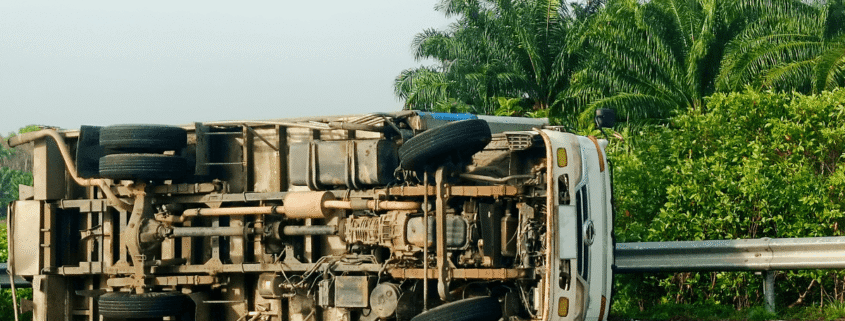
DuPage County Truck Accident Lawyer
Seek Legal Support for Victims Injured in Semi Crashes in DuPage County, IL
Depending on your background, you may refer to them as tractor-trailers, semis, 18-wheelers, or big rigs. Regardless of the terminology used, large commercial trucks constitute a significant portion of the traffic on Illinois roadways, including the busy thoroughfares of DuPage County. These massive vehicles present unique dangers when involved in motor vehicle collisions. An accident involving a large truck often results in catastrophic physical harm and, in many tragic instances, wrongful death. If you have suffered injuries in a commercial truck collision, the team at Fotopoulos Law Office is prepared to assist you in seeking the compensation provided for under the law.
What Makes DuPage County Roads Dangerous and Prone to Commercial Truck Collisions?
DuPage County is a high-risk “logistics corridor” where heavy freight traffic from O’Hare and rail yards meets suburban commuters. Frequent collisions at hotspots like the I-88/I-355 interchange result from aggressive lane changes and infrastructure friction. Under Illinois’ modified comparative negligence laws, these accidents require complex litigation involving black box data to resolve the dangerous tension between commercial utility and suburban safety.
DuPage County serves as a critical transit hub for the Midwest, positioning it at a volatile intersection of heavy industry and suburban life. DuPage County has emerged as a high-risk “logistics corridor,” wedged between Chicago’s rail yards and Fox Valley’s distribution centers. Constant freight traffic from O’Hare and the CPKC Bensenville Yard forces heavy 18-wheelers onto suburban arteries like Route 83 and Route 59, creating dangerous friction with commuters. High-stakes hotspots, including the I-88/I-355 interchange, frequently see collisions due to aggressive lane changes and “squeeze” points.
Knowledgeable Truck Crash Injury Representation in DuPage County
Compared to a standard passenger car accident, truck crashes are significantly more likely to result in life-altering injuries due to the massive scale and weight of the vehicles involved. A typical commercial truck measures approximately 70 feet in length and can carry a load of up to 80,000 pounds. At highway speeds, the momentum generated by a fully loaded tractor-trailer is immense, creating forces that smaller vehicles simply cannot withstand.
A truck accident case is also inherently complex due to the various entities that may hold legal responsibility. Commercial trucks are frequently operated by large corporations with significant resources, legal teams, and multiple insurance layers designed to limit their financial liability. Furthermore, the trucking industry is governed by a dense web of federal and state regulations. A diligent attorney can investigate the facts of your case to identify every liable party and pursue a strategy aimed at securing the full compensation you require for your recovery.
What Are the Types of Truck and Semi-Truck Accident Cases We Handle at the Fotopoulos Law Firm?
The Fotopoulos Law Firm represents victims of diverse commercial truck accidents. Their expertise covers jackknifes and rollovers caused by sudden maneuvers, and catastrophic underride or head-on collisions. They also handle wide-turn “squeeze” accidents, rear-end impacts due to heavy weight, and lost load incidents. These cases often involve severe injuries from massive force or hazardous cargo spills.
Summary of Commercial Truck Accident Types
| Accident Type | Primary Causes | Key Risks & Impact |
| Jackknife | Sudden braking, wet/icy roads, or sharp maneuvers. | Trailer swings into a “V” shape; blocks multiple lanes; leads to pile-ups. |
| Rollover | High speed in curves, sudden steering, or unbalanced cargo. | High center of gravity causes truck to flip; can crush vehicles or spill hazardous cargo. |
| Underride | Passenger vehicle slides beneath the trailer. | Roof-level impact; often fatal or catastrophic due to guard failure or poor visibility. |
| Wide Turn | “Squeeze play” where truck swings left to turn right. | Smaller vehicles crushed between the truck and the curb in blind spots. |
| Rear-End | Distraction, tailgating, and long stopping distances. | Massive impact force due to weight; requires up to 200 yards to stop. |
| Lost Load | Faulty tie-downs or improper loading techniques. | Falling debris causes other drivers to swerve; triggers chain-reaction crashes. |
| Head-On | Crossing the center line or driving the wrong way. | Often caused by fatigue or impairment; almost always catastrophic. |
What Are Frequent Causes of 18-Wheeler Accidents in DuPage County?
Common causes of 18-wheeler accidents in DuPage County often involve driver fatigue from demanding schedules and insufficient training for navigating corridors like I-88. Safety is further compromised by impaired driving, speeding, and distractions like mobile devices. Additionally, mechanical failures due to inadequate maintenance—such as brake issues—and operational negligence involving overloaded or unbalanced cargo significantly increase crash risks. Investigating logging data and maintenance records is crucial for establishing liability.
DuPage County Trucking Risks & Liability
Trucking accidents in DuPage County often stem from driver fatigue during long hauls to O’Hare, compounded by insufficient training for navigating suburban density like Naperville. We investigate ELD data and carrier records to identify violations.
Impaired driving and distracted driving on corridors like Route 59 are frequent culprits, while overloaded trailers from Bensenville hubs compromise braking safety. Additionally, inadequate maintenance—exacerbated by Illinois winters—leads to mechanical failures on I-355. By analyzing IDOT records and maintenance logs, we hold negligent parties accountable for the unique risks present on DuPage’s congested roads.
Common Injuries Resulting from DuPage County Trucking Crashes
Due to the immense forces involved, truck accidents frequently result in:
- Traumatic Brain Injuries (TBI): Ranging from concussions to permanent cognitive damage.
- Spinal Cord Trauma: Including partial or total paralysis.
- Complex Fractures: Often requiring multiple surgeries and long-term physical therapy.
- Internal Organ Injuries: Damage to vital organs caused by blunt force impact.
- Severe Burn Injuries: Often resulting from fuel leaks or chemical spills.
- Amputations and Crush Injuries: Resulting from the compression of the passenger cabin.
Parties That May Be Responsible for a DuPage County Truck Accident
Multiple entities may share legal liability following a collision. Our investigation covers:
| Potentially Liable Parties | Primary Responsibilities & Potential Violations |
| The Truck Driver | Speeding, distracted driving, fatigue, or operating under the influence. |
| The Trucking Company | Negligent hiring, failure to train, or imposing unrealistic delivery schedules. |
| Equipment Manufacturers | Producing defective parts such as brakes, tires, or steering components. |
| Cargo Shippers/Loaders | Failure to balance or secure freight according to safety regulations. |
| Maintenance Providers | Failing to perform necessary repairs or inspections on the fleet. |
What Compensation Can You Recover in a DuPage County Truck Accident?
Victims of DuPage County truck accidents can recover economic damages for medical bills, lost wages, and property damage, alongside non-economic compensation for pain, suffering, and emotional distress. Punitive damages may be awarded for extreme negligence. Under Illinois’ modified comparative negligence rule, recovery is possible if the victim is 50% or less at fault, though the final award is reduced by their specific percentage of responsibility.
1. Economic Damages (Objective Financial Losses)
Economic damages cover the measurable out-of-pocket expenses resulting from the crash. These are often calculated using bills, receipts, and employment records.
- Medical Expenses: This includes everything from the initial emergency room visit and surgery to ongoing physical therapy, medications, and future medical care for permanent injuries.
- Lost Wages and Earning Capacity: If your injuries prevent you from working, you can recover lost income. If you are permanently disabled or must take a lower-paying job, you may also claim “loss of future earning capacity.”
- Property Damage: This covers the repair or replacement of your vehicle and any personal property destroyed in the collision.
2. Non-Economic Damages (Subjective Quality-of-Life Losses)
These damages compensate for the intangible impact of the accident on your life.
- Pain and Suffering: This accounts for the physical pain and chronic discomfort caused by your injuries.
- Emotional Distress: Victims often suffer from PTSD, anxiety, or depression following a traumatic wreck.
- Disfigurement and Disability: Compensation for permanent scarring or the loss of use of a limb.
- Loss of Consortium: In severe cases, a spouse may recover damages for the loss of companionship and support.
3. Punitive Damages
In rare instances where a trucking company or driver acted with “willful and wanton” disregard for safety—such as driving under the influence or intentional safety violations—Illinois courts may award punitive damages. These are intended to punish the wrongdoer and deter similar conduct in the future.
Illinois Laws and Truck Accident Claims in DuPage County
If you have been involved in a collision with a commercial vehicle in DuPage County, navigating the legal aftermath requires an understanding of specific Illinois statutes. Truck accidents are significantly more complex than standard passenger vehicle crashes because they involve both state laws and federal safety regulations. This guide outlines the primary Illinois laws that will govern your claim.
Modified Comparative Negligence (735 ILCS 5/2-1116)
Illinois follows a legal standard known as “modified comparative negligence.” This law is critical because it determines whether you can recover money if you were partially responsible for the accident. Under this rule, an injured person can only recover damages if they are 50% or less at fault for the crash.
If you are found to be 20% at fault, your total compensation will be reduced by 20%. For example, if your damages total $100,000, you would receive $80,000. However, if a court or insurance adjuster determines you were 51% responsible, the law bars you from recovering any compensation at all from the other parties.
Vicarious Liability and “Respondeat Superior”
In a typical car accident, you usually sue the other driver. In truck accidents, Illinois law allows you to hold the trucking company responsible for the driver’s actions through a doctrine called “vicarious liability” (or respondeat superior).
This law states that an employer is legally responsible for the negligent acts of its employees, provided the employee was acting within the “scope of their employment” at the time of the crash. This is vital for victims because trucking companies typically carry much larger insurance policies than individual drivers, ensuring there are enough funds to cover serious injuries.
Statute of Limitations (735 ILCS 5/13-202)
The statute of limitations is the legal deadline for filing a lawsuit. In Illinois, the standard deadline for personal injury claims resulting from a truck accident is two years from the date of the collision. If you miss this window, the DuPage County courts will almost certainly dismiss your case, and you will lose your right to seek compensation.
It is important to note that if the accident only resulted in property damage (and no physical injuries), the deadline is extended to five years. Conversely, if the truck involved was owned by a government entity—such as a municipal waste truck or a regional transit vehicle—the deadline to file can be as short as one year.
Mandatory Insurance Minimums (625 ILCS 5/7-203)
While all Illinois drivers must carry liability insurance, commercial trucks are subject to much higher requirements due to their potential for catastrophic damage. While standard cars must carry at least $25,000 per person for bodily injury, commercial trucks operating within Illinois are often required to carry significantly more, sometimes ranging from $750,000 to $5 million, depending on the type of cargo they are hauling (such as hazardous materials).
Reporting Requirements and Evidence
Illinois law (625 ILCS 5/11-406) requires any driver involved in an accident resulting in injury or property damage over $1,500 ($500 if a driver is uninsured) to file a crash report with the Illinois Department of Transportation within 10 days.
In DuPage County, evidence such as “black box” data (Electronic Logging Device data) is governed by state and federal discovery rules. This data records the truck’s speed, braking patterns, and hours of service, which can prove if a driver was speeding or fatigued in violation of the law.
Understanding these statutes is the first step toward a successful recovery. Because DuPage County has specific local court rules, many victims choose to consult with a legal professional to ensure all filing requirements are met.
Protecting Your Legal Rights in Wheaton, Naperville, and Beyond
A successful legal claim begins with a comprehensive review of the collision and the factors that contributed to it. This allows us to determine the sequence of events and identify the liable parties. At Fotopoulos Law Office, we are committed to keeping you informed as your case progresses. We prioritize clear communication, ensuring you have the information needed to make informed decisions. Attorney John S. Fotopoulos is prepared to stand up to trucking corporations and their insurance providers to pursue the damages you are entitled to under the law.
Contact Our DuPage County Truck Accident Attorney
If you or a loved one has been hurt in a large truck crash, you do not have to face this situation alone. We are here to handle the legal aspects of your case, so you can focus on your recovery. Contact our office to get the help you need. Call 708-942-8400 for a free consultation and case review today.
We serve clients in Wheaton, Naperville, Elmhurst, Downers Grove, Lombard, Lisle, Carol Stream, and throughout DuPage County and the surrounding areas.
DuPage County Truck Accident: Frequently Asked Questions
1. Why is DuPage County considered a high-risk “logistics corridor” for truck accidents?
As a vital Midwest hub, DuPage County bridges Chicago’s rail yards and Fox Valley distribution centers. This geography forces heavy rigs onto suburban arteries like Routes 83 and 59 alongside dense commuter traffic. Proximity to O’Hare and Bensenville Yard ensures freight saturates local roads. This friction between commercial utility and daily life increases catastrophic collision risks where delivery routes overlap schools.
2. What are the most dangerous intersections and landmarks for truck crashes in DuPage County?
In DuPage, the I-88 and I-355 interchange near Lisle’s Morton Arboretum is a collision hotspot. Its complex ramp system demands aggressive lane changes, endangering cars near heavy haulers. Similarly, Route 59 through Naperville handles intense retail and commercial traffic. This mix fuels frequent rear-end and T-bone accidents at intersections like 75th Street, where blind-spot errors and “squeeze plays” occur.
3. How does Illinois’ “Modified Comparative Negligence” rule affect my truck accident claim?
Illinois follows a “Modified Comparative Negligence” rule, critical for compensation recovery. Under 735 ILCS 5/2-1116, you can only recover damages if you are 50% or less at fault. Exceeding 51% bars any recovery. Partial fault reduces awards proportionally. In DuPage, complex signage and signals complicate liability, making legal representation essential to prove the trucking company’s primary fault and protect awards.
4. What is the “Single-File Mandate” for legal investigation into truck black box data?
In truck collisions, attorneys treat “black box” or ELD data as the primary truth. This records speed, braking, and hours of service. In DuPage, where deadlines are tight, this proves if drivers sped or violated rest breaks. Because carriers may delete this evidence, your legal team must quickly issue a spoliation letter to legally require the preservation of critical data.
5. Who can be held legally responsible for a truck accident besides the driver?
Truck cases involve multiple liable entities. Under “vicarious liability,” companies are responsible for employee negligence. However, liability extends to cargo loaders for unbalanced freight, maintenance providers for mechanical failures like faulty brakes, and manufacturers for defective parts. Identifying every party is vital to ensure sufficient insurance layers exist to cover catastrophic losses resulting from these complex, high-stakes commercial vehicle accidents.
6. What are the most common types of truck accidents handled by your firm?
Our firm handles technical collisions like jackknifes and fatal underride accidents where cars slide beneath trailers. We also represent victims of “squeeze play” wide turns and rollovers caused by high centers of gravity. Whether it is a lost load on I-355 or a head-on collision from fatigue, we reconstruct events to identify the primary cause and hold negligent parties accountable.
7. How does “Driver Fatigue” contribute to accidents on DuPage County roads?
Truckers entering DuPage are often exhausted from long hauls toward Chicago. Navigating congestion on Route 59 leads to impairment similar to alcohol, causing dangerous “microsleep” episodes. We investigate ELD data to find “hours-of-service” violations. Proving a company pushed a driver beyond legal limits establishes negligence, helping victims secure the high level of compensation required for life-altering, fatigue-related traffic injuries.
8. What are the specific risks of “Overloaded” or “Unbalanced” trucks in suburban areas?
In hubs like Bensenville, overloaded trailers are deadly risks. Excess weight makes semis harder to stop on I-88 off-ramps. Furthermore, unbalanced loads shift during turns, causing jackknifes or rollovers. Our team reviews IDOT weigh station records and shipping manifests to identify if loaders cut corners. We ensure that those responsible for compromising vehicle stability are held liable for catastrophic impacts.
9. What kinds of economic and non-economic damages can I recover?
DuPage victims can recover economic damages like medical bills, lost wages, and vehicle repairs. Non-economic damages cover subjective losses including chronic pain, emotional distress, and disfigurement. In cases of extreme negligence, such as DUI or intentional safety violations, courts may award punitive damages. These serve to punish the wrongdoer and deter similar conduct, ensuring comprehensive recovery for the injured party.
10. What is the statute of limitations for filing a truck accident lawsuit in Illinois?
Per 735 ILCS 5/13-202, the standard personal injury deadline is two years from the crash. Missing this window bars your right to compensation. Exceptions exist: property damage claims allow five years, while accidents involving government vehicles, like municipal trucks, may have a one-year limit. Early legal consultation is essential to navigate these varying deadlines and protect your right to sue.
11. How do narrow bridge overpasses and “squeeze” points in DuPage cause accidents?
Massive trucks often encounter aging DuPage infrastructure, like narrow overpasses or tight merges near Wheaton. These “squeeze” points lead to sideswipe accidents. Our investigation determines if the carrier provided sufficient training for tight suburban corridors. We analyze whether the driver ignored “no-zones” or if the company assigned unsafe routes for an 80,000-pound vehicle, contributing to these avoidable, dangerous suburban collisions.