
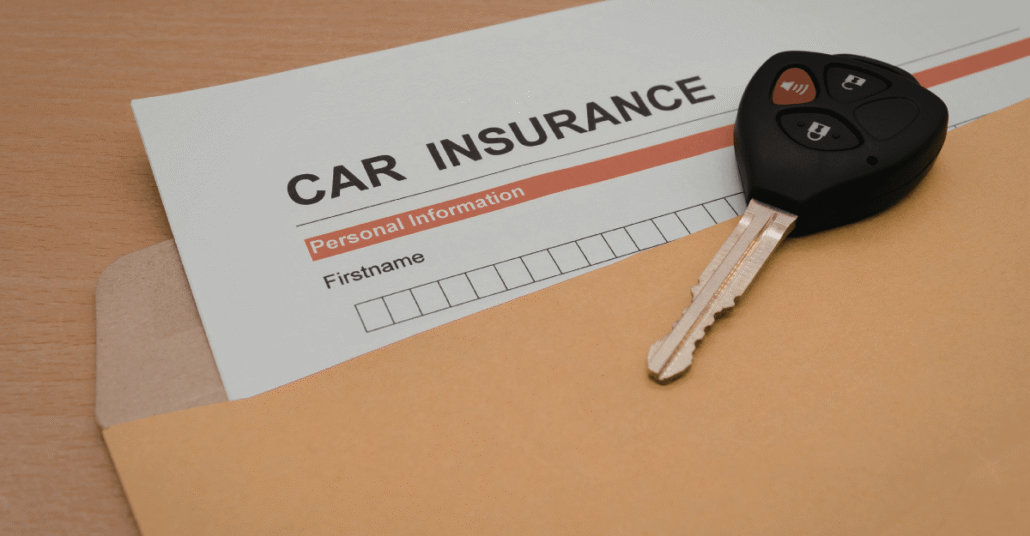
What If the Other Driver Doesn’t Have Insurance in a Chicago Car Crash?
The moments after an impact on the Dan Ryan Expressway are chaotic enough without the other driver admitting they carry no auto coverage. You exchange names, inspect the damage to your vehicle, and the harsh reality sets in: the financial burden of this crash might fall entirely on your shoulders. Aching joints and tired muscles quickly give way to the stress of an uncertain future.
For many injured motorists in our area, discovering the at-fault driver is uninsured feels like a dead end. The path to physical and financial recovery seems blocked by someone else’s negligence.
How Does Illinois Law Protect You Against Uninsured Drivers?
Under Illinois law, you are protected against uninsured drivers through your own auto insurance policy. The state mandates that every auto liability policy include Uninsured Motorist (UM) coverage, which steps in to pay for your medical bills and injury-related costs when the at-fault driver lacks insurance.
This specific protection comes directly from within your own policy. A first-party claim involves seeking compensation from the company you pay premiums to every month. When a negligent driver lacks coverage, your insurer essentially steps into the shoes of the at-fault driver. They evaluate the duty of care, determine proximate cause, and assess the extent of your bodily injury just as the opposing party’s carrier would have done.
This shift in responsibility sounds straightforward, but it creates an inherently adversarial relationship with your own insurance company. Their adjusters will scrutinize your medical records and attempt to minimize your payout to protect their corporate bottom line. Building a strong case requires the same level of rigorous evidence gathering as a traditional third-party lawsuit.
To ensure public protection, lawmakers established strict statutory requirements. This legislative mandate prevents drivers from unknowingly opting out of critical protection, ensuring a basic safety net exists for anyone injured on public roadways.
What Are the Mandatory Uninsured Motorist Limits in Illinois?
Illinois requires all drivers to carry a minimum of $25,000 per person and $50,000 per accident in Uninsured Motorist Bodily Injury coverage. While these are the minimums, many drivers carry higher limits that match their standard bodily injury liability coverage to ensure adequate protection.
While these mandatory minimums offer some relief, they are frequently insufficient in the face of severe trauma. A brief emergency room visit at Northwestern Memorial Hospital or John H. Stroger Jr. Hospital, followed by a single MRI and a few weeks of physical therapy, can easily exceed $25,000. If your injuries require surgical intervention or extended hospitalization, state minimum coverage will leave you severely undercompensated.
This gap highlights the importance of regularly reviewing your auto policy declarations page. We strongly encourage drivers to carry uninsured motorist limits that exceed the state minimums. Increasing your coverage limits is often a highly cost-effective way to protect your household from the devastating financial impact of an uninsured driver.
Will My Own Auto Insurance Rates Increase If I File a UM Claim?
Filing an uninsured motorist claim in Illinois generally should not cause your insurance premiums to increase, provided you were not at fault for the crash. State regulations prohibit insurance carriers from penalizing policyholders for accidents caused by entirely uninsured or hit-and-run drivers.
One of the most frequent concerns we hear from injured clients is the fear of being penalized for someone else’s mistake. Many drivers hesitate to file a claim with their own carrier because they assume their monthly premiums will skyrocket. This hesitation is understandable, but it is largely unfounded when dealing with a no-fault UM claim.
The Illinois Department of Insurance monitors pricing practices to ensure carriers do not unfairly punish victims. An uninsured motorist claim is fundamentally different from an at-fault collision claim. Because you did not cause the accident, your insurer cannot logically classify you as a higher-risk driver based solely on the incident.
Furthermore, your insurance company retains the right of subrogation. This means that after they pay your uninsured motorist claim, they have the legal authority to pursue the at-fault driver for reimbursement. While collecting from an uninsured individual is notoriously difficult, the legal mechanism exists, keeping the liability appropriately assigned to the negligent party.
How Do Hit-and-Run Accidents Work Under Chicago UM Policies?
If you are a victim of a hit-and-run accident in Chicago, your uninsured motorist coverage treats the fleeing driver as an uninsured motorist. You must typically prove physical contact occurred between the vehicles and report the incident to the Chicago Police Department within 24 hours to qualify.
A driver fleeing the scene of a crash presents a unique set of challenges. Because the identity and insurance status of the phantom vehicle cannot be verified, Illinois law allows your UM coverage to step in and treat the unknown driver as uninsured.
However, insurance carriers apply strict criteria to hit-and-run claims to prevent insurance fraud. The most critical requirement is proving physical contact. If a reckless driver swerves into your lane on DuSable Lake Shore Drive, forcing you into the median without actually striking your vehicle, your UM claim may be heavily contested or denied. There must be objective evidence such as paint transfer, matching dents, or reliable witness testimony demonstrating that the fleeing vehicle made physical contact with your car.
Prompt reporting is equally critical. Most insurance policies require you to notify law enforcement, such as the Chicago Police Department, within 24 hours of the hit-and-run. Failing to generate an official police report within this tight window gives your insurance company powerful grounds to deny your claim entirely.
What Steps Should You Take Immediately After a Crash with an Uninsured Driver?
After a crash with an uninsured driver, immediately call law enforcement to create an official accident report. Collect the other driver’s contact details, take scene photographs, seek prompt medical attention at a local hospital, and notify your insurance carrier that the at-fault party lacks coverage.
The actions you take in the hours immediately following a collision heavily influence the success of your subsequent uninsured motorist claim. Protect your health and your legal rights by following a clear, systematic process.
When building a successful UM claim, documentation is your strongest asset. We advise our clients to take the following steps:
- Call 911 immediately to ensure law enforcement responds to the scene and generates an official crash report.
- Take photographs of the vehicle damage, the surrounding roadway, and any skid marks, ensuring you stay safely out of traffic lanes.
- Collect the at-fault driver’s name, phone number, address, and driver’s license number, even if they admit they have no insurance.
- Identify any witnesses and collect their contact information before they leave the area.
- Seek emergency medical attention immediately to establish a baseline medical record linking your injuries directly to the crash.
- Notify your insurance company about the accident, but decline to provide a recorded statement until you have secured legal representation.
Can You Sue an Uninsured Driver Directly in Cook County?
While you have the legal right to sue an uninsured driver directly in Cook County civil court, it is rarely the most effective strategy. Uninsured drivers typically lack the personal assets or income necessary to pay a judgment, making your own UM policy the most reliable source of financial recovery.
From a purely legal standpoint, the driver who caused your injuries remains personally liable for your damages. You have the absolute right to file a personal injury lawsuit against them at the Cook County Circuit Court inside the Daley Center. However, practical reality often dictates a different approach.
In the legal field, a defendant without significant personal wealth, real estate, or garnishable income is considered ‘judgment proof.’ You might invest significant time and resources to win a court verdict, only to discover there is no money to collect. A piece of paper declaring you are owed $100,000 has little value if the defendant’s bank accounts are empty.
Filing a claim against your own uninsured motorist coverage is almost always a faster, more reliable pathway to financial recovery. Your insurance company has the liquid assets necessary to pay the claim promptly once liability and damages are proven. We evaluate the at-fault driver’s financial status during our initial investigation to determine the most viable strategy for your specific case.
What Types of Damages Are Covered Under Uninsured Motorist Policies?
Uninsured motorist coverage compensates you for bodily injury damages you would have legally recovered from the at-fault driver. This includes past and future medical expenses, lost wages from missed work, physical pain and suffering, and loss of a normal life following the collision.
An uninsured motorist claim is designed to make you whole by covering the same damages a third-party liability policy would have paid. This compensation is divided into economic and non-economic damages.
Economic damages cover out-of-pocket financial losses with clear documentation. We aggressively pursue compensation for:
- Emergency transportation and trauma center care.
- Surgical interventions, hospital stays, and prescription medications.
- Ongoing physical therapy and required medical equipment.
- Lost wages for time missed from work during your physical recovery.
- Diminished future earning capacity if your injuries cause permanent physical limitations.
Non-economic damages address the human cost of the collision. This includes compensation for the physical pain and suffering you endure, as well as the emotional distress of dealing with a traumatic event. We also pursue damages for ‘loss of a normal life,’ which compensates you for your inability to participate in hobbies, enjoy family activities, or maintain your pre-accident lifestyle.
It is important to note that standard UM coverage pays strictly for bodily injury. Damage to your vehicle is handled under a separate provision known as Uninsured Motorist Property Damage (UMPD) or your standard collision coverage.
What Happens If the At-Fault Driver Is Underinsured Rather Than Uninsured?
If the at-fault driver has insurance but their policy limits are too low to cover your total damages, your Underinsured Motorist (UIM) coverage applies. Your UIM policy pays the difference between the at-fault driver’s inadequate limits and the total value of your claim, up to your own policy maximum.
Not every driver you encounter is completely uninsured. Frequently, we see cases where the negligent driver carries the state minimum $25,000 policy, but our client’s medical bills and lost wages amount to $100,000. In these scenarios, the at-fault driver is considered underinsured.
Underinsured Motorist (UIM) coverage works in tandem with the at-fault driver’s policy. Before you can tap into your own UIM benefits, you must first exhaust the negligent driver’s policy limits. Once their carrier tenders the full $25,000 limit, your own insurance company steps in to cover the remaining $75,000 shortfall, provided your UIM limits are high enough.
Handling UIM claims requires careful procedural timing. You cannot simply accept a settlement from the at-fault driver and release them from liability without first obtaining explicit written permission from your own insurance carrier. Failing to follow this exhaustion procedure can void your underinsured motorist coverage entirely, leaving you with unpaid medical bills.
How Long Do You Have to File an Uninsured Motorist Claim in Illinois?
The timeline for filing an uninsured motorist claim depends strictly on the language in your specific insurance contract. While standard personal injury lawsuits in Illinois have a two-year statute of limitations, many auto insurance policies require you to demand UM arbitration within two years of the crash.
Deadlines in first-party insurance claims can be incredibly complex. In a standard personal injury case against a negligent driver, Illinois law generally provides two years from the date of the accident to file a formal civil lawsuit. However, an uninsured motorist claim is governed by the terms of your specific insurance contract.
Most insurance carriers align their contract deadlines with the state’s statute of limitations, requiring you to formally demand uninsured motorist arbitration within two years of the collision. However, the exact notification requirements and filing deadlines vary from carrier to carrier. Missing these contractual deadlines will result in an absolute denial of your claim.
Waiting until the two-year mark is approaching is a significant risk. Gathering medical records, conducting skip traces to verify the at-fault driver is truly uninsured, and negotiating with adjusters takes considerable time. Early intervention is the most effective way to preserve evidence and keep your claim moving forward without unnecessary delays.
Moving Forward with Your Uninsured Motorist Claim
A severe injury caused by an uninsured driver disrupts your life, your family, and your financial security. At Fotopoulos Law Office, our experienced attorneys understand the local courts, the aggressive tactics used by auto insurance carriers, and the heavy physical toll you are currently carrying. We evaluate the available coverage, handle all communications with the adjusters, and fight to maximize your compensation. We represent clients on a strict contingency fee basis. This means you pay no attorney’s fees unless we secure a financial recovery for you.
Contact us today to schedule a confidential, free consultation. We will listen to your story, review your policy declarations page, and help you understand your legal options before any contractual deadlines expire.
Frequently Asked Questions About Uninsured Drivers
Do I need a lawyer to file a claim against my own insurance company?
While you are not legally required to hire an attorney, it is highly recommended. Your insurance company will aggressively defend its financial interests and attempt to minimize your payout. An experienced attorney levels the playing field, handles the complex arbitration process, and ensures your rights are fully protected.
What if I was a pedestrian hit by an uninsured driver?
If you are struck by an uninsured driver while walking or cycling in Chicago, your own auto insurance policy’s uninsured motorist coverage typically applies. The coverage follows you, the policyholder, rather than just the vehicle itself. This ensures you have a pathway to recovery even when you are not behind the wheel.
Does uninsured motorist coverage pay for the damage to my car?
Standard uninsured motorist bodily injury coverage only pays for medical bills, lost wages, and pain and suffering. To cover vehicle repairs after a crash with an uninsured driver, you must have Uninsured Motorist Property Damage (UMPD) coverage or standard collision coverage explicitly listed on your policy.
Can my insurance company deny my uninsured motorist claim?
Yes, your insurance company can deny your claim if they believe you caused the accident, if you failed to report a hit-and-run within the required timeframe, or if you missed filing deadlines. They may also deny the claim if they find evidence that the at-fault driver actually possessed valid liability insurance at the time of the crash.
How long does an uninsured motorist settlement take in Illinois?
The timeline varies widely depending on the severity of your injuries and the insurance company’s willingness to negotiate fairly. Some straightforward claims settle within a few months after your medical treatment concludes. If the insurance carrier disputes the severity of your injuries, the case may proceed to formal arbitration, which can significantly extend the timeline.









Leave a Reply
Want to join the discussion?Feel free to contribute!