
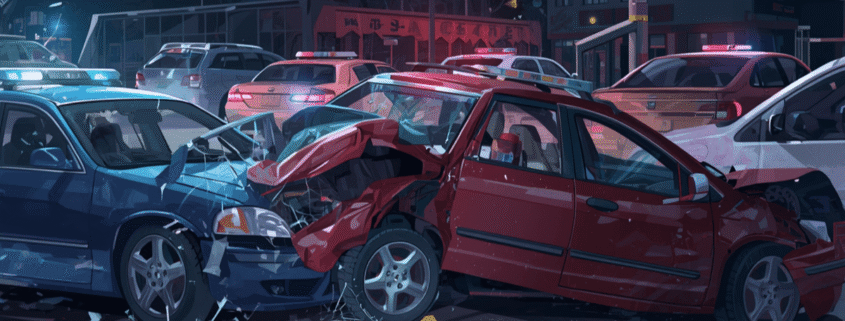
Orland Park DUI Accident Attorneys
The moments following a sudden vehicle collision on LaGrange Road are frequently filled with confusion, shock, and intense physical pain. When you realize the driver who struck your vehicle was severely impaired by alcohol, that confusion quickly turns to profound frustration. Drunk driving is a completely preventable choice that shatters lives across the southwest suburbs every single day, leaving innocent motorists to deal with the physical and financial fallout.
The southwest suburbs are highly car-dependent, meaning local thoroughfares carry massive volumes of commuter and commercial traffic daily. The mixture of high-speed travel and sudden deceleration points creates a highly dangerous environment for anyone sharing the road with an intoxicated motorist. Drivers operating under the influence frequently fail to notice sudden stops, leading to severe collisions.
What Should I Do After a Drunk Driving Crash in Cook County?
After a drunk driving crash in Cook County, immediately move to a safe location, call 911 to request the Orland Park Police or Illinois State Police, and seek emergency medical evaluation at a local facility like Northwestern Medicine Palos Hospital. Never engage in an argument with an intoxicated driver.
The actions you take in the immediate aftermath of a DUI collision directly affect both your physical health and the viability of any future legal claim. The chaos of an accident scene can easily lead to simple mistakes that insurance adjusters will later use to undermine your case. Your first priority must always be safety and securing an official record of the event.
Taking the following steps will protect your well-being and preserve critical evidence for your claim:
- Move to safety: If your vehicle is operable and it is safe to do so, move out of the active lanes of traffic to the shoulder to avoid secondary collisions on busy routes like 143rd Street.
- Obtain official police documentation: Calling the police ensures that an official accident report is generated. Tell the responding officer if you suspect the other driver is intoxicated, so they can administer field sobriety tests and note it in their official findings.
- Capture photographic evidence: Use your phone to photograph vehicle damage, the lack of skid marks on the road, traffic signs, and any visible injuries before this critical evidence is cleared away.
- Keep your distance: Do not engage in an argument with the at-fault driver. Keep your interactions brief and factual while waiting for law enforcement to arrive.
- Establish a medical record: Visit an emergency department or urgent care facility immediately. Establishing immediate medical documentation ties your injuries directly to the accident, leaving no gap in treatment for insurers to question your claim’s validity.
How Does Illinois Law Define Civil Liability for Impaired Driving?
Illinois law provides a robust framework allowing injury victims to hold impaired drivers financially liable through civil personal injury claims. These lawsuits operate entirely separate from any criminal DUI proceedings initiated by the state. While both cases arise from the same reckless act, their mechanisms, standards of proof, and ultimate goals are fundamentally distinct.
A civil claim requires proving that the intoxicated driver breached their duty of care by operating a vehicle under the influence, directly causing your physical injuries and subsequent financial losses. To navigate this process successfully, it is essential to understand how Illinois statutes define liability, what types of compensation are available, and how third parties may also share financial responsibility.
The Critical Distinction: Criminal DUI vs. Civil Personal Injury Claims
When an impaired driver causes a motor vehicle collision, they simultaneously trigger two independent legal tracks: the criminal justice system and the civil court system.
- Criminal Prosecution: A criminal DUI prosecution focuses on punishing the driver for breaking state laws. Orchestrated by a state or county prosecutor, this action can result in jail time, criminal fines, community service, or driver’s license suspension. However, the criminal court’s primary objective is societal deterrence and punishment—it does not inherently compensate you for your hospital bills, vehicle damage, or physical suffering.
- Civil Personal Injury Claims: To recover your financial losses, you must actively pursue a civil personal injury claim. This action is brought directly by you (the plaintiff) against the driver and their insurance provider (the defendants). The goal is entirely compensatory, seeking to restore your financial stability and acknowledge your non-economic hardships.
The Advantage of the Civil Burden of Proof
Under the state’s statutes regarding driving under the influence of alcohol, specifically 625 ILCS 5/11-501, a driver is legally impaired if their blood alcohol concentration (BAC) is 0.08 or higher, or if they are under the influence of cannabis, controlled substances, or any other drug to a degree that renders them incapable of safely driving.
In a civil case, we establish liability by proving that this impairment constituted a breach of the driver’s standard of care. Because the burden of proof in civil court is a preponderance of the evidence (meaning the allegation is more likely true than not) rather than the criminal standard of beyond a reasonable doubt, an injury victim can successfully secure financial compensation even if the at-fault driver avoids a criminal DUI conviction, accepts a reduced plea deal, or has their criminal charges dismissed due to procedural technicalities.
Establishing Negligence and Punitive Damages
In a standard car accident case, the plaintiff must meticulously prove every element of negligence: duty, breach, causation, and damages. However, when an accident involves an impaired motorist, the legal landscape shifts in favor of the victim.
Negligence Per Se
In Illinois, violating a public safety statute—such as the law prohibiting driving under the influence found in 625 ILCS 5/11-501—can be treated as negligence per se or prima facie evidence of negligence. This means that by proving the driver was operating a vehicle while over the legal limit or otherwise impaired, the legal requirement to prove they breached their duty of care is essentially fulfilled. The focus then turns entirely to proving that their impairment directly caused the crash and your resulting injuries.
Punitive Damages for “Willful and Wanton” Conduct
While compensatory damages are designed to cover actual losses (such as medical bills, rehabilitation costs, lost wages, and pain and suffering), Illinois law allows for an additional category of financial recovery in egregious cases: punitive damages.
Under Illinois common law, punitive damages may be awarded if the defendant’s behavior demonstrates a “willful and wanton” disregard for the safety of others. Making a conscious choice to drink heavily or consume intoxicating drugs and then operate a multi-ton vehicle fits this definition perfectly.
Procedural Note: Pursuant to 735 ILCS 5/2-604.1, you cannot request punitive damages in your initial personal injury complaint for negligence. Instead, your attorney must first file a pretrial motion and establish at a hearing that there is a “reasonable likelihood” of proving facts at trial sufficient to support an award of punitive damages, thereby securing leave from the court to amend the complaint. Furthermore, any such motion to amend must be made no later than 30 days after the close of discovery.
There is no statutory cap on punitive damages in Illinois personal injury cases. Juries are permitted to award substantial amounts depending on several aggravating factors, including:
- An exceptionally high BAC (e.g., 0.15 or greater).
- A history of prior DUI convictions or chemical test refusals.
- Excessive speeding, street racing, or fleeing the scene of the accident.
Can I Sue the Bar or Restaurant that Overserved the Drunk Driver?
Potentially, yes. Under the Illinois Dram Shop Act (codified under the Liquor Control Act of 1934, 235 ILCS 5/6-21), you may be able to file a third-party lawsuit against the commercial establishment that sold or served the alcohol to the at-fault driver. If a bar, restaurant, tavern, or liquor store overserves a patron who subsequently causes an impaired driving accident, that business shares financial liability for your damages.
The Dram Shop Act allows injured parties to seek compensation from the vendor, provided your legal team can prove the following four specific elements:
- The vendor sold or gave alcoholic liquor to the patron.
- The patron consumed the alcohol and became intoxicated.
- The alcohol provided by the vendor caused or materially contributed to the patron’s intoxication.
- The patron’s intoxication was the proximate (primary) cause of the accident and your resulting injuries.
Unlike the laws in many other states, Illinois does not require you to prove that the establishment knew or should have known the patron was visibly intoxicated at the time of service. The law focuses strictly on whether the business contributed to the intoxication that ultimately caused the harm.
Strict Rules and Statutory Caps Under the Dram Shop Act
While the Dram Shop Act provides a valuable avenue for maximizing financial recovery, it comes with strict procedural limitations and statutory liability caps that do not apply to standard personal injury lawsuits against the driver.
2026 Liability Limits
The Illinois Office of the Comptroller adjusts the financial caps on Dram Shop liability annually based on the Consumer Price Index (CPI). For final judgments or settlements awarded on or after January 20, 2026, the recovery limits are strictly capped as follows:
| Type of Damage Under the Dram Shop Act | 2026 Maximum Recovery Cap |
|---|---|
| Injury to a Person or Property (per individual incurring damages) | $90,411.55 |
| Loss of Means of Support or Loss of Society (resulting from death or injury) | $110,503.00 |
Because these statutory limits are relatively low compared to the catastrophic costs of severe collisions, a dual-pronged strategy is critical. Victims must pursue common law negligence damages (which have no caps) against the driver’s auto insurance policy while simultaneously seeking the maximum allowable statutory caps from the establishment’s dram shop insurance provider.
An Accelerated Timeline
Another critical difference is the timeline for filing a claim. While a standard personal injury claim in Illinois features a two-year statute of limitations under 735 ILCS 5/13-202, a Dram Shop lawsuit features a strict filing window under 235 ILCS 5/6-21. Illinois courts have interpreted this one-year proviso not merely as an ordinary procedural statute of limitations, but as a mandatory condition precedent to the right of recovery itself. If you fail to file a formal lawsuit against the commercial vendor within one year of the date the cause of action accrued, your right to recover compensation from that business is permanently barred.
The Complicity Defense
Commercial establishments often defend themselves by invoking the judicial doctrine of complicity. Under Illinois law, a business cannot be held liable if the injured plaintiff actively contributed to the driver’s intoxication. If you purchased drinks for the at-fault driver, encouraged them to drink heavily, or willingly participated in the intoxication process alongside them, the court may bar you from recovering any damages under the Dram Shop Act.
Contextualizing Risk: The Orland Park Landscape
The practical reality of these laws is highly evident in communities like Orland Park. Featuring a unique blend of heavy commercial retail zones, vibrant dining corridors, and dense residential neighborhoods, Orland Park presents a driving environment where brief lapses in attention quickly escalate into severe collisions.
High-traffic thoroughfares like La Grange Road and 159th Street are tightly packed with shopping centers, popular bars, and local entertainment venues. When patrons leave these local establishments after consuming too much alcohol, they navigate immediate transitions from commercial parking lots onto fast-moving suburban roadways. The proximity of these entertainment districts to quiet residential zones means that an impaired driver poses an immediate, localized threat to families and commuters alike.
The state explicitly provides the Dram Shop Act to prevent commercial entities in high-density areas from prioritizing liquor sales over public safety, holding businesses accountable when their over-service spills onto community roads.
Maximizing Financial Recovery
Navigating a civil claim for impaired driving requires a comprehensive approach to gathering evidence. To secure full compensation, an injury lawyer will typically secure police accident reports, breathalyzer or blood test results, event data recorder (“black box”) metrics from the vehicles, bar tabs, retail surveillance footage, and expert witness testimony to reconstruct the crash. By holding both the negligent driver and the irresponsible establishment accountable, Illinois civil law creates a path for victims to cover their extensive medical bills, secure their long-term financial stability, and find a sense of justice following a preventable tragedy.
Gathering Critical Evidence for Dram Shop Claims
Building a successful dram shop claim requires aggressive evidence collection to prove the establishment knowingly overserved the patron. This involves subpoenaing credit card receipts, securing security camera footage from the venue, and interviewing staff or other patrons who witnessed the driver’s behavior prior to the collision.
Because distraction and intoxication occur inside the privacy of the at-fault driver’s vehicle or a closed business, building a successful legal claim means uncovering evidence that the driver actively tries to hide. Security cameras positioned outside retail stores frequently overwrite their video footage within 14 to 30 days. We work quickly to secure this footage before it is overwritten, often revealing the driver stumbling or displaying obvious signs of impairment prior to impact. We also formally request transaction histories to determine exactly how many drinks were purchased in the hours leading up to the wreck.
Why Are High-Speed Drunk Driving Collisions So Dangerous?
Intoxicated drivers suffer from severely delayed reaction times and impaired judgment, meaning they typically do not apply their brakes or attempt evasive maneuvers before a crash occurs. This forces the human body to absorb a tremendous amount of violent kinetic energy, frequently leading to catastrophic trauma requiring transport to local Level 1 trauma centers.
When a driver’s attention and cognitive abilities are suppressed by alcohol, they completely miss critical environmental cues. The combination of high speeds and numerous traffic signals along major north-south arteries means an impaired driver will likely fail to brake for a red light.
Victims of these high-speed impacts in the southwest suburbs are frequently transported to local facilities or airlifted to Level 1 trauma centers, such as Advocate Christ Medical Center in Oak Lawn, with life-altering trauma. The road to recovery for these patients is often long, agonizing, and incredibly expensive. Many of these injuries require extended hospitalization, specialized rehabilitation, and significant, permanent lifestyle adaptations.
The most serious conditions frequently documented in impaired driving collisions include:
- Traumatic brain injuries: Resulting from blunt force trauma, TBIs can produce severe cognitive deficits, memory loss, chronic migraines, and personality changes that persist for years.
- Spinal cord damage: The violent forces of a high-speed rear-end or side-impact crash can fracture vertebrae or sever the spinal cord, leading to partial or complete paralysis.
- Complex orthopedic fractures: High-impact collisions frequently shatter bones in the legs, arms, and pelvis, requiring surgical hardware insertion and months of intensive therapy.
- Soft tissue damage: Severe whiplash and torn ligaments are common when the head is thrown violently back and forth, leading to chronic pain and severely restricted mobility.
What Compensation Is Available for Orland Park DUI Accident Victims?
Illinois DUI accident victims can seek comprehensive compensation for their objective financial losses and subjective personal suffering. This includes full reimbursement for past and future medical bills, lost income during recovery, property damage repair, and significant financial recovery for physical pain and emotional distress.
When a negligent driver strikes your vehicle because they were severely impaired, the heavy financial burden of recovery should not fall on your shoulders. By working with medical professionals and financial specialists, we calculate the true, long-term cost of the accident. This ensures that any settlement demand accurately reflects the total impact the collision has had on your life, your career, and your family.
Illinois law allows accident victims to pursue distinct categories of damages designed to make the injured party whole again:
- Current and future medical expenses: This covers emergency room visits, hospital admissions, surgical procedures, prescription medications, and long-term physical therapy or rehabilitation costs.
- Lost wages and earning capacity: This repays you for the income missed while out of work recovering, as well as compensation for diminished future earning potential if a permanent injury alters your career trajectory.
- Pain and suffering: This compensates you for the intense physical pain and profound emotional trauma endured as a direct result of the collision.
- Loss of enjoyment of life: This addresses your inability to participate in hobbies, exercise routines, or family activities that you enjoyed prior to being injured by the drunk driver.
In cases where a drunk driver’s actions were exceptionally reckless or intentional, juries may also award punitive damages. These are designed strictly to punish the at-fault driver and deter similar behavior in the community.
How Do We Prove the Other Driver Was Intoxicated?
Proving intoxication requires gathering objective evidence beyond the initial police report. This includes subpoenaing toxicology reports, securing dashcam or local surveillance footage, interviewing eyewitnesses, and analyzing the at-fault driver’s criminal court records from their corresponding DUI prosecution.
Impaired drivers rarely admit fault to the police, and they certainly do not volunteer to their insurance companies that they were legally intoxicated when the crash occurred. Our firm approaches these cases methodically, utilizing the legal tools available to force the disclosure of vital information.
We utilize several advanced methods to uncover the truth and build an undeniable case:
- Analyzing electronic event data recorders: Modern vehicles are equipped with black boxes that record vehicle dynamics. A complete lack of braking or evasive steering recorded in the seconds before a crash strongly indicates the driver was dangerously impaired.
- Securing law enforcement records: We obtain the official breathalyzer results, field sobriety test footage, and detailed arrest reports from the responding police departments.
- Interviewing eyewitnesses: Statements from other motorists or pedestrians who explicitly saw the driver swerving erratically or driving aggressively can provide powerful, independent corroboration of your claim.
- Monitoring criminal proceedings: We closely track the at-fault driver’s criminal DUI case. A guilty plea or conviction in criminal court serves as powerful evidence of negligence in your civil claim.
How Long Do I Have to File A DUI Injury Lawsuit In Illinois?
In Illinois, injury victims generally have exactly two years from the specific date of the drunk driving accident to file a formal personal injury lawsuit. Failing to file your claim within this strict statutory deadline will permanently bar you from recovering any financial compensation.
While two years may seem like ample time to handle a legal matter, waiting to initiate your claim is a severe mistake. The success of a DUI injury case relies heavily on objective evidence, and that evidence begins to deteriorate the very minute the accident is cleared from the roadway.
Retaining legal counsel early in the process ensures that an immediate preservation of evidence letter can be sent to the at-fault driver’s insurance company and any potentially liable commercial establishments under the Dram Shop Act. Delaying legal action puts your claim at severe risk due to fading witness recollection, as human memory fades rapidly and eyewitnesses quickly forget the specific, crucial details of a chaotic collision.
Will My DUI Injury Case Go to Trial in Bridgeview?
The vast majority of personal injury cases settle through negotiation before ever reaching a courtroom. However, preparing a highly documented case for trial at the 5th Municipal District Courthouse often motivates insurance companies to offer fair settlements without a trial.
Insurance adjusters evaluate risk. When they see a thoroughly prepared case file detailing clear liability, catastrophic injuries, and concrete evidence of extreme impairment, they understand that a jury is likely to heavily penalize their policyholder. We frequently prepare cases as if they will be tried in front of a Cook County judge, which maximizes our negotiating leverage.
If the insurance carrier refuses to offer a settlement that fully covers your medical expenses and immense suffering, our litigation team is fully prepared to present your case to a jury and aggressively fight for a maximum verdict.
Contact Our Orland Park DUI Accident Attorneys
Navigating the aftermath of a severe drunk driving collision requires a strategic legal approach and a deep understanding of the Cook County court system. At Fotopoulos Law Office, we are dedicated to identifying all liable parties, preserving critical evidence of driver impairment, and fighting for the maximum financial recovery you deserve. Our knowledgeable attorneys thoroughly investigate every avenue of compensation, including potential dram shop liability for businesses that prioritize profit over community safety. We handle every aspect of the legal process so you can focus entirely on your physical recovery.
Contact us today to schedule a free, no-obligation consultation with a legal professional who understands exactly what you are going through. We are ready to listen to your story and explain your legal options.
Frequently Asked Questions
What If the Drunk Driver Who Hit Me Was Uninsured?
If the at-fault driver lacked insurance, you can pursue compensation through the uninsured motorist coverage on your own auto insurance policy. This coverage is required by law in Illinois and steps in to cover your medical bills and suffering when the negligent driver cannot. Our firm regularly reviews client policies to maximize the recovery available through their own insurance carriers.
Can I Still Recover Compensation If I Was Partially at Fault for the Crash?
Yes, under the state’s comparative negligence framework, you can still recover damages as long as you were less than 50 percent responsible for the accident. Your total financial award will simply be reduced by your assigned percentage of fault. Insurance adjusters frequently attempt to shift blame onto victims, which makes having strong legal representation essential.
Does The Driver Need to Be Convicted of a DUI for Me to Win my Civil Case?
No, a criminal conviction is not required to win a civil personal injury lawsuit. The burden of proof in a civil claim is much lower than in a criminal courtroom. Even if a technicality results in the driver’s criminal charges being dismissed, we can still use the police reports and independent evidence to prove they breached their duty of care.
How Long Does A DUI Car Accident Settlement Take in Cook County?
Timelines vary significantly based on case complexity and your medical recovery. Straightforward claims with clear liability may resolve in several months, while cases involving disputed fault or catastrophic injuries requiring long-term medical prognoses can take a year or more to conclude. We never rush a settlement before understanding the full extent of your future medical needs.
What If My Injuries Did Not Appear Until Days After the Crash?
Delayed-onset injuries, such as concussions, severe whiplash, or internal bleeding, are remarkably common following vehicle collisions. You must seek a medical evaluation immediately upon noticing symptoms so your health records directly link the developing conditions to the impaired driving accident. Gaps in medical treatment provide insurance companies with an excuse to deny your injury claim.